CONTACT US NOW
Get A Free Inquiry Now

7 Tips for Buying Genuine Leather Ladies Bags

A Genuine Leather Ladies Bag should feel dependable before it looks impressive. The right choice depends on more than a polished photograph or a “genuine leather” label. Check the grain, stitching, edge finish, lining, hardware, and seller’s product details. Small clues matter. A loose thread near the handle or rough paint along an edge may reveal rushed finishing, though neither proves the entire bag is poorly made.

Fashion designer Vivienne Westwood’s familiar advice, “Buy less, choose well, make it last,” offers a useful starting point. Apply it carefully: a higher price does not guarantee better leather, and a smooth surface does not automatically mean low quality. Ask what type of leather the seller describes, how the bag is constructed, and what care it needs. If possible, inspect it in natural light. Feel the material, open every pocket, and test the zipper without forcing it.

There is no perfect checklist. Some details can be difficult to judge online, and product descriptions may leave questions unanswered. That is worth admitting. Look for clear photographs, specific material information, a realistic care guide, and a return policy you understand. Then consider how you will use the bag: a daily tote needs sturdy handles, while a small evening bag may prioritize light weight. These seven tips will help you compare options with a sharper eye and fewer assumptions.

7 Tips for Buying Genuine Leather Ladies Bags

Understand Leather Types and Quality Grades

Leather labels can be confusing because terms describe different things. Full-grain leather keeps the outer hide surface, including small natural marks. It often develops a deeper patina with use, but visible variation is not proof of quality by itself. Top-grain leather has had its surface lightly corrected or refined, so it may look more even. Feel the surface. It should not seem coated in a thick, plastic-like layer. Corrected-grain leather is more heavily treated for a uniform appearance, while split leather comes from lower hide layers and may be finished with a coating. Bonded leather contains leather fibers combined with binders; it is not the same as a continuous piece of hide.

“Genuine leather” alone is a broad label, not a reliable quality grade. Ask what part of the hide was used, how the surface was finished, and whether the bag’s panels are leather throughout. Check a seam near the handle, the cut edges, and the base. Uneven stitching or peeling edges may reveal weak construction, even when the surface looks polished. Look closely. Natural grain varies, so identical marks across several panels can suggest embossing, though embossing is not automatically poor quality. Leather quality also depends on thickness, tanning, and construction. A supple bag can still stretch out. No quick test tells the whole story, and I would treat vague claims cautiously.

Inspect the Bag’s Material, Stitching, and Hardware

At the counter, examine the leather in daylight. Genuine leather often shows small pores, uneven grain, or subtle marks; a perfectly repeated texture may indicate an embossed surface, though appearance alone cannot prove material. Flex a corner gently. It should bend without cracking or feeling like a thin plastic film. The smell test is unreliable. Finishes and storage can change the scent, so ask for a material description and care label. ISO 2419:2012 specifies conditioning leather test samples at 23 ± 2°C and 50 ± 5% relative humidity—a reminder that professional material checks use controlled conditions, unlike a quick shop-floor inspection.

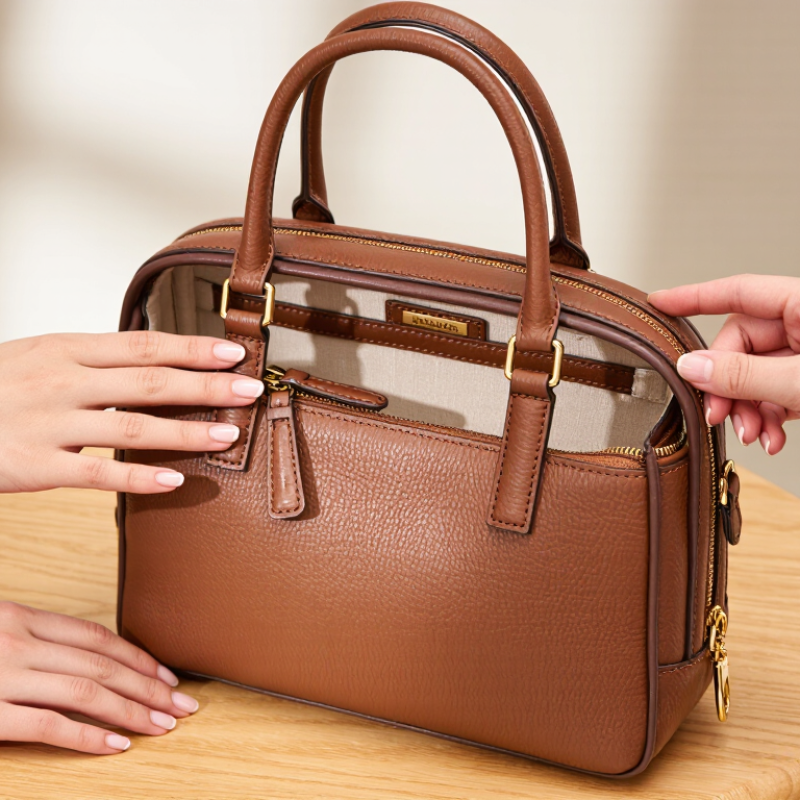
Look closely at the seams where handles meet the bag. Stitches should be even, secure, and free from loose ends; gently pull the handle to check for movement. Unevenness is not automatic proof of poor quality, but gaps near stress points deserve attention. Test the zipper several times. It should glide without catching, while clasps and rings should feel firmly attached and leave no sharp edges. Check the hardware’s underside, too. Plating can hide a lighter base metal, and a bright finish tells you little about durability. This inspection is imperfect; ask whether the seller can identify the hardware material and explain the repair or care options.

7 Tips for Buying Genuine Leather Ladies Bags: Inspect Material, Stitching, and Hardware

This guide groups practical checks into three areas: material (5 points), stitching (4 points), and hardware (4 points). The counts represent checklist items, not product test results or a guarantee of authenticity.

Choose a Style, Size, and Features for Your Needs

A useful leather bag should fit the routines you actually have, not an imagined version of your day. A shoulder bag keeps essentials close on short trips, while a structured tote can hold a tablet and papers. For crowded commutes, check whether the straps stay put and the top closes securely. Fit matters. Measure your largest daily item before shopping; a bag that looks roomy can have a narrow opening or awkward interior.

Size is only part of the decision. Check pocket placement, lining, zipper movement, and whether the base stands up when set down. Genuine leather varies in grain and may show small natural marks, so inspect seams and edges rather than expecting a perfectly uniform surface. In-store, test the bag with a few items inside; online, compare the listed dimensions with a bag you already use.

Allied Market Research’s Handbags Market report estimated the global market at $47.2 billion in 2022 and projected $78.5 billion by 2032. That market forecast is context, not a reason to buy.

I still sometimes overvalue extra pockets; they can add bulk without improving access. Choose features you will use.

Check Labels, Seller Credentials, and Return Policies

A label is a useful starting point, not proof by itself. Look for clear wording about the bag’s material, including which parts are leather and which are not. Vague claims such as “leather feel” deserve a closer look. Check the care card and product description too; details should agree. If the label is missing or unclear, ask the seller in writing. Keep the reply.

Seller credentials matter just as much. Look for a working contact method, a clear business address, and product photos showing seams, edges, lining, and hardware. Reviews can help, but repeated praise without specific details is weak evidence. Read the critical reviews as well. Keep screenshots. A neat product page can still leave important questions unanswered, and I sometimes find it easy to mistake polish for proof.

Read the return policy before paying. Check the return window, whether the bag must be unused, who pays return shipping, and how refunds are issued. Look for exceptions on sale items. If the policy is hard to find, ask for the exact terms before ordering. Save the policy and receipt. This takes a few extra minutes, yet it can prevent a stressful dispute if the bag arrives with a different material or finish than described.

7 Tips for Buying Genuine Leather Ladies Bags — Check Labels, Seller Credentials, and Return Policies

Tip What to Check Useful Details Why It Matters
1. Read the material label Look for a clear description of the material used for the bag’s outer body and, where stated, its trim. Terms such as “genuine leather” indicate leather, but do not by themselves specify the animal, grade, or tanning method. “Bonded leather” generally refers to material made with leather fibers or scraps combined with a binder. Specific wording helps you compare products and avoid treating vague terms such as “leather look” as proof of animal leather.
2. Check the seller’s credentials Review the seller’s contact information, business details, customer-service options, and independent customer feedback. Check that the product description and seller information are consistent across the listing, checkout, and receipt. Be cautious if the seller cannot be contacted or gives contradictory details. A traceable seller is easier to contact if the item is misdescribed, defective, or difficult to return.
3. Inspect the bag in person Examine the surface, edges, stitching, lining, handles, seams, and hardware. Leather can show natural variation in grain and texture. Neat stitching and securely attached handles are useful signs of construction quality, but appearance alone cannot confirm material composition. Close inspection can reveal workmanship issues that may not be visible in product photos.
4. Ask for material details Ask what parts are leather and whether the bag includes synthetic coatings, fabric panels, or non-leather trim. Request a written answer if the listing is unclear. A bag may combine different materials, so a general description might not apply to every component. Knowing the composition helps you make an informed purchase and set realistic expectations for care and wear.
5. Compare price with the details Compare the stated materials, construction, dimensions, and included features with similar listings. Price alone cannot prove whether a bag is genuine leather. Unusually low prices paired with vague descriptions are a reason to investigate further, not conclusive evidence of a problem. Comparing like-for-like details is more useful than relying on price or promotional claims alone.
6. Review the return policy Check the return window, condition requirements, return shipping costs, refund method, and any exclusions. Save a copy of the policy and product description before ordering. Return rights and requirements differ by location and seller, so check the terms that apply to your purchase. A clear, practical return option gives you a way to address a product that does not match its description.
7. Keep proof of purchase Save the receipt, order confirmation, listing, material claims, and any written answers from the seller. Photograph the bag and its labels when it arrives, before removing tags or using it. Keep packaging until you have checked the item. Records can help explain what was advertised if you need to raise a concern or request a return.

Buying note: Labeling rules and consumer protections vary by country or region. Check the requirements and return terms that apply where you are buying.

Compare Prices and Review Care Requirements

When comparing prices for genuine leather ladies bags, look beyond the number on the tag. Check the leather description, stitching, lining, hardware, and return terms side by side. A higher price may reflect better construction, but price alone proves little. Ask whether the leather is full-grain, top-grain, or corrected-grain; these terms describe different surfaces and finishes. Inspect the seams near the handles, where strain often shows first. Compare like with like. A compact bag with a simple lining is not directly comparable to a larger, structured style with extra pockets.

Care affects the real cost of ownership. Read the care instructions before buying, especially if the leather needs a specific conditioner or professional cleaning. Some finishes tolerate a damp cloth; others can stain or dull when rubbed. Test any product on a hidden spot first. Keep the bag away from heaters and store it with light paper inside to help maintain its shape. Small habits matter. I sometimes underestimate how quickly dark denim can mark pale leather, so a bag that looks easy to maintain may still need more attention than expected. There is no perfect choice. Compare the care routine with your daily use, not just the sale price.