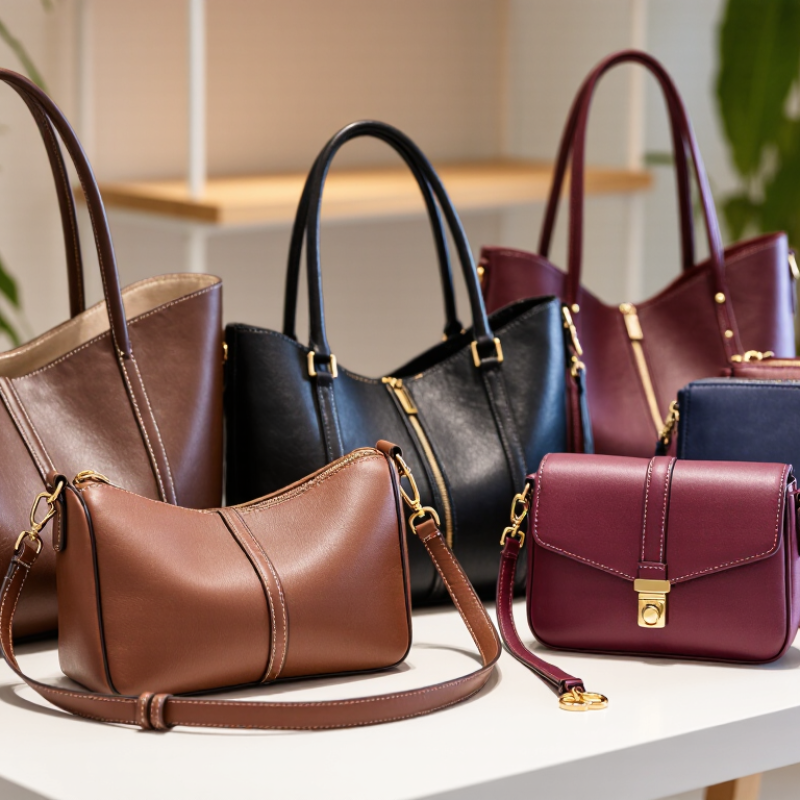
Discover our premium leather bag collection, designed for style and functionality. From chic purses, versatile tote bags, and sleek shoulder bags, to durable backpacks, stylish laptop bags, and compact makeup bags, we have it all. Explore luxurious duffel bags, practical belt bags, trendy sports bags, lunch bags, and pet bags.
Choosing a Genuine Leather Ladies Bag for 2026 means looking beyond seasonal color and polished campaign images. The global leather goods market was valued at approximately USD 419.9 billion in 2023, according to Grand View Research, which projected a 6.6% compound annual growth rate from 2024 to 2030. This figure covers leather goods broadly, not ladies’ handbags alone, so it offers context rather than a precise forecast for this category. Still, it signals a large market where shoppers benefit from checking construction, materials, and care requirements before buying.
A useful perspective comes from Orsola de Castro, a fashion circularity expert and co-founder of Fashion Revolution: “The most sustainable garment is the one already in your wardrobe.” Her point is about clothing, not handbags, but it also raises a fair question for bag buyers: will this piece be used often and cared for well? Look closely at the grain, stitching, handle attachment, lining, and hardware. A neatly finished edge matters. So does a strap that feels comfortable on your shoulder. Genuine leather can develop character with use, but the label alone does not guarantee craftsmanship, durability, or responsible sourcing. That part deserves scrutiny. This guide considers practical styles, fit, maintenance, and buying checks for 2026, while recognizing that even careful research cannot predict how every bag will age.
A genuine leather ladies’ bag is made from animal hide, not a plastic-based imitation. Yet the label tells you what the material is, not how durable or carefully finished the bag will be. Leather can come in different grades, including full-grain, top-grain, and split leather. Each has a distinct texture, feel, and expected wear. The wording alone is not a quality guarantee.
Look closely. Natural grain often has small variations, while a perfectly repeated surface may suggest an applied finish or imitation. Check the seams, handles, and areas around the hardware; these points take daily strain. Run a finger over the surface. It may feel supple or firm, depending on the hide and treatment. A leather scent can be a clue, but it is not proof. I used to trust the label too much.
A well-made bag should feel balanced when carried, with handles that sit comfortably on the shoulder. Check whether the lining and pockets suit what you actually carry, not just what looks tidy in a photograph. Leather can soften and develop marks over time. That’s part of its character, though not every mark feels charming. Keep the bag dry when possible, wipe away dust with a soft cloth, and follow care instructions suited to its finish.
When choosing the best genuine leather ladies bag for 2026, start with the leather type, not the label. “Genuine leather” only means real leather, not automatically premium quality. Full-grain leather keeps the natural outer surface, including small grain variations. It feels firm, gains character, and often lasts for years with careful use. Top-grain leather is lightly corrected, so it looks smoother and feels more flexible. Both options suit a daily handbag.
Split leather comes from deeper layers of the hide. It is usually softer and less resistant to abrasion. Suede is also made from a split surface, creating a velvety texture that needs protection from rain and oily marks. Corrected-grain leather receives surface treatment to hide scars. It can look polished, but heavy coating may reduce natural breathability. I once chose a perfectly smooth bag over a textured one. I was wrong; the smooth finish showed scratches sooner.
Tanning also changes performance. Vegetable-tanned leather develops richer color over time, but water marks can appear easily. Chrome-tanned leather is usually softer, lighter, and more consistent.
Check the stitching, edge paint, lining, and handle attachment before buying. These details often reveal construction quality better than leather claims. A strong bag should feel balanced when filled. Not excessively heavy.
I still question whether “luxury” matters when the handle hurts after ten minutes. Practical comfort deserves equal attention.
Best Genuine Leather Ladies Bag for 2026
How Design and Construction Affect Quality
A genuine leather ladies bag should feel balanced before it looks beautiful. When I inspect a bag, I hold it by the handle and check whether the body tilts. Uneven weight often reveals weak construction. Full-grain leather usually shows natural pores, slight color variation, and a firm but flexible surface. Perfect uniformity can sometimes indicate heavy coating rather than superior material.
Design affects daily comfort. A wide strap spreads pressure across the shoulder, while a narrow strap may dig into clothing. Compartments should fit practical items without making the bag bulky. Smooth zippers, reinforced handles, and neatly folded edges suggest careful assembly. Look closely at the stitching. Consistent spacing matters more than decorative thread. Loose ends can become trouble.
Small details matter.
The lining should sit flat and resist tearing near pockets. Metal hardware needs a solid finish, but excessive weight may reduce comfort. I once preferred a structured bag because it looked refined, then found its stiff opening inconvenient on crowded trains. That experience changed my view of “quality.” A beautiful design can still fail when it ignores movement and routine. Buyers should check the base, handle attachments, seam tension, and pocket depth. Some natural leather marks are harmless, though deep scars or brittle areas deserve caution. A careful construction review is more reliable than appearance alone.
| Quality Dimension | What to Look For | Why It Matters | Useful Check |
|---|---|---|---|
| Leather type | Clearly identified leather, such as full-grain, top-grain, or split leather, with a finish suited to the intended use. | Different cuts and finishes vary in surface appearance, flexibility, and resistance to wear. “Genuine leather” alone does not specify a particular grade. | Check the product description for the leather type and finish rather than relying on the phrase “genuine leather” by itself. |
| Surface and hide selection | A consistent finish, with natural marks disclosed where relevant and no unexplained peeling, sticky coating, or weak-looking areas. | Leather is a natural material, so minor differences in grain and color are normal; poor finishing can affect appearance and service life. | Inspect the bag in natural light, especially corners, folds, and areas around handles. |
| Stitching | Even stitch spacing, secure thread ends, and straight seams without skipped stitches or loose loops. | Seams carry load and help the bag retain its shape. Uneven or loose stitching may indicate weak construction. | Examine stress points, including handle attachments, strap tabs, and the base corners. |
| Handles and straps | Firm attachment points, reinforced stitching, comfortable edges, and adjustable hardware where adjustment is offered. | Handles and straps bear repeated pulling and carrying forces, making their attachment among the most important structural areas. | Gently test the attachments and check that adjustment holes and buckles are neatly finished. |
| Hardware | Closures, rings, buckles, and feet that operate smoothly and are firmly secured, with an even protective finish. | Hardware affects function and can scratch, tarnish, or loosen with use, depending on its material and finish. | Open and close each fastening several times; check for sharp edges, wobbling, or misalignment. |
| Interior construction | A lining that lies flat, neatly finished seams, and pockets attached securely to the lining or bag structure. | A well-finished interior reduces snagging and helps pockets remain useful under regular use. | Check pocket openings, lining seams, and the area around interior zippers. |
| Shape and structure | A silhouette appropriate to the design, with a stable base when structure is intended and no distorted panels. | Reinforcement and panel construction influence how a bag holds its shape and how contents are supported. | Set the bag on a flat surface and observe whether it sits as intended; consider whether its structure suits your usual load. |
| Closure and access | A zipper, magnetic fastening, or other closure that aligns properly and is easy to use. | Reliable closures help secure belongings and make the bag practical in everyday situations. | Test the closure with the bag empty and lightly filled to check alignment and ease of operation. |
| Capacity and weight | Dimensions and weight that match intended items, with enough room without forcing seams or closures. | A bag that is too small, heavy, or overfilled can be uncomfortable and may place extra strain on its construction. | Compare stated dimensions with items you carry regularly and check the empty weight if it is provided. |
| Care and documentation | Clear care instructions and accurate information about materials, lining, and hardware. | Appropriate care can help preserve leather and finishes; different leathers may require different products and handling. | Follow the maker’s care guidance and test any cleaning product on an inconspicuous area first. |

Best Genuine Leather Ladies Bag for 2026
Key Factors for Choosing a Bag in 2026
When choosing a genuine leather ladies bag, examine the material before trusting the label. Full-grain leather usually shows natural grain, small marks, and a subtle smell. Perfectly uniform surfaces may indicate heavy coating or imitation materials. Ask about the leather composition, tanning process, and lining. Reliable sellers should provide clear answers and care instructions.
Practical design matters more than seasonal decoration. Check whether the bag fits your phone, wallet, keys, and a small umbrella. Test the handle length with a coat on. Strong stitching, smooth zippers, and reinforced corners can prevent early damage. In my experience, a beautiful bag becomes frustrating when its opening is too narrow. Comfort counts.
Consider repairability and responsible production in 2026. Look for replaceable straps, accessible stitching, and hardware that can be repaired. Traceable sourcing is useful, but vague environmental claims deserve careful questions. A leather bag is not automatically sustainable because it lasts longer. I once chose a heavy style that looked durable, yet carrying it daily hurt my shoulder. That mistake changed my buying habits. Choose a weight you can handle, a color suited to your wardrobe, and a return policy that protects you when online photos mislead.
This evaluation framework uses a practical 100-point weighting system. Material quality and craftsmanship receive the highest weights because they strongly influence durability, appearance, and long-term value. Functionality, comfort, and hardware complete the assessment for everyday use.
Best Genuine Leather Ladies Bag for 2026
A genuine leather ladies bag can become more beautiful with careful use. Its surface may develop a deeper color and soft, natural marks over time. Wipe dust away with a clean, dry microfiber cloth after wearing it outdoors. Small habits matter. Avoid placing the bag on damp floors or rough surfaces. Moisture can leave dark spots, while friction may dull the finish.
Tips: Keep cosmetics inside a washable pouch. Store the bag upright with soft tissue inside, but never use newspaper. Test any leather conditioner on a hidden area first. Apply a tiny amount with a soft cloth, then wait several hours. Do not use alcohol wipes, strong detergents, or direct heat. If the bag becomes wet, gently blot it and let it dry at room temperature.
I have learned that over-conditioning can make leather feel sticky. Less is usually safer. I still forget to empty my bag before storing it, and heavy items can slowly change its shape. Check the handles, corners, and stitching every few weeks. A loose thread should not be pulled. Seek professional leather repair when damage reaches the lining or structure. Care cannot prevent every mark, but it can keep the bag useful, balanced, and comfortable for years.