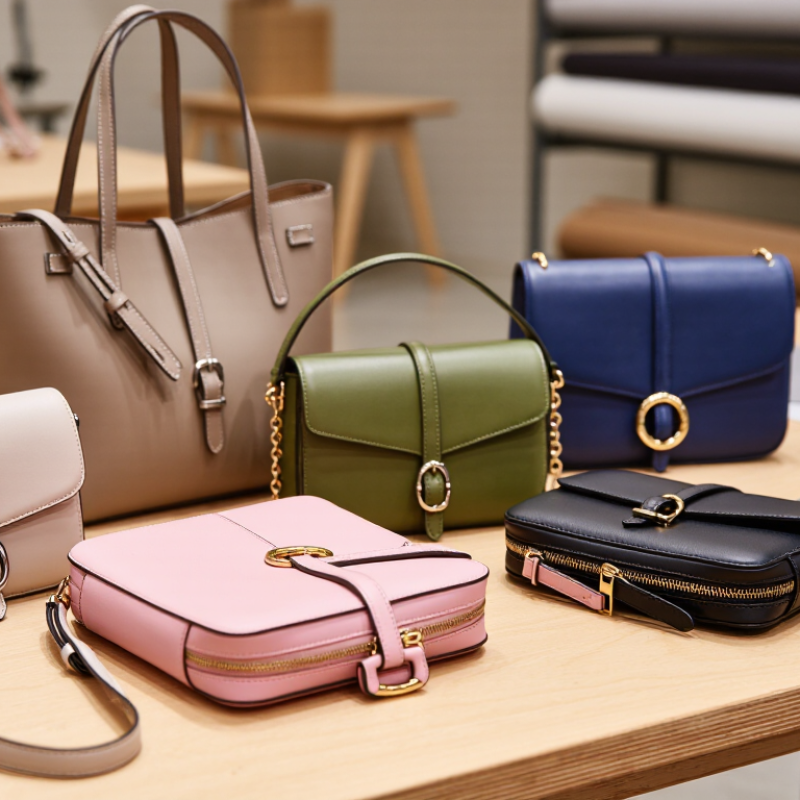
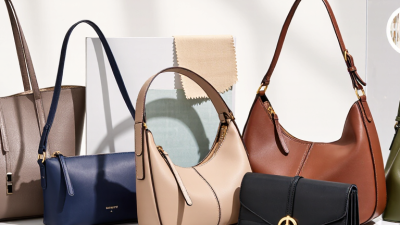
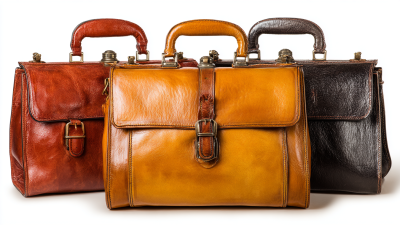
Discover our premium leather bag collection, designed for style and functionality. From chic purses, versatile tote bags, and sleek shoulder bags, to durable backpacks, stylish laptop bags, and compact makeup bags, we have it all. Explore luxurious duffel bags, practical belt bags, trendy sports bags, lunch bags, and pet bags.
Sourcing Pu Leather Handbags for a business takes more than comparing catalog photos and unit prices. The right supplier should explain materials, construction, production capacity, and quality checks clearly. Ask for a sample you can handle. Check its weight, surface feel, stitching, zipper movement, lining, and edge paint. A neat photograph cannot reveal a weak seam.
Fashion designer Stella McCartney has said, “I don’t want to kill animals for fashion, but I want to make beautiful things.” Her words capture one reason businesses consider alternatives to animal leather. Still, PU is not automatically a better environmental choice. Ask suppliers for clear material specifications and evidence behind any environmental claims. Confirm the PU coating and backing fabric, and request relevant test results when available.
Then compare suppliers against your actual needs. Set expectations for dimensions, colors, hardware, packaging, minimum order quantities, lead times, and acceptable defects. Request production samples before approving a bulk order. Check color transfer and surface wear, especially on handles and corners. Ask how the factory manages batch consistency and handles quality issues. Keep written records of approved samples and specifications.
There is room for judgment. A sample can still mislead. A low price may hide uneven finishing or slow communication. This guide outlines practical steps for assessing suppliers, checking product quality, and making purchasing decisions with fewer surprises.
UN Comtrade offers a practical starting point for mapping handbag demand. Search HS 4202 imports by destination and year, then compare trade values, quantities, and supplier countries. For PU handbags, HS 4202.22 may be relevant because it covers handbags with outer surfaces of plastic sheeting or textile materials. Classification depends on a product’s construction, so confirm the code with a customs specialist before using it.
The figures need careful reading. HS 4202 also covers luggage and other containers, not just handbags. Import value can rise because of higher prices, not more units. Grand View Research estimated the global synthetic leather market at USD 33.7 billion in 2023 and projected a 7.4% compound annual growth rate from 2024 to 2030. That signals broader material interest, not handbag-specific demand. Treat it as context. Check the detail. Compare several years of UN Comtrade data, and look for steady import growth alongside consistent quantities. A sharp jump may reflect one unusual shipment or reporting changes. The first shortlist may still be wrong. Check destination data against local retail observations, such as which bag sizes and finishes appear on store shelves.
When sourcing PU leather handbags, define performance before comparing samples. ISO 1421 measures tensile strength and elongation at break in coated fabrics; ISO 2411 measures coating adhesion. Ask suppliers which test method and specimen direction they use, because results can differ. Set minimum values for the finished material, then test production-lot samples—not only showroom swatches.
Grand View Research estimated the global synthetic leather market at about USD 31.5 billion in 2022, with growth projected through 2030. That scale makes consistent specifications useful, but a market forecast cannot prove one supplier’s quality. Request dated lab reports that identify the PU construction, thickness, conditioning, test method, and results. For example, record tensile strength in both machine and cross directions, and coating adhesion in N per 25 mm. Inspect a cut edge, too: peeling after flexing can undermine an otherwise attractive surface. These checks reduce surprises, though they do not guarantee bag durability. I would revise specs after pilot production; early targets are often imperfect.
Tips: Test material from the actual handbag order. Keep a sealed reference swatch, and agree in writing how failed results trigger retesting or rejection.
| Property | Test method | Suggested purchasing specification | Why it matters for handbags | Supplier report should include |
|---|---|---|---|---|
| Coated-fabric tensile strength — machine direction | ISO 1421, Method 1 (strip method) | Minimum 500 N per 50 mm strip | Helps the material withstand pulling forces in panels, seams, handles, and attachment areas. | Individual results, test direction, specimen width, test method, and conditioning details. |
| Coated-fabric tensile strength — cross direction | ISO 1421, Method 1 (strip method) | Minimum 400 N per 50 mm strip | Checks strength across the material width, where orientation and construction can affect performance. | Individual results and a clear identification of the cross direction. |
| Elongation at break — machine direction | ISO 1421, Method 1 (strip method) | Buyer-defined range: 15%–45% | A controlled range helps avoid material that stretches excessively or has limited flexibility during bag construction and use. | Elongation at break reported as a percentage, with the corresponding direction and test method. |
| Elongation at break — cross direction | ISO 1421, Method 1 (strip method) | Buyer-defined range: 15%–50% | Supports comparison of stretch behavior in both fabric directions and helps with pattern and cutting decisions. | Elongation at break reported as a percentage, with the corresponding direction and test method. |
| PU coating adhesion to textile backing | ISO 2411 | Minimum 10 N per 50 mm strip | Checks resistance to separation of the PU coating from its backing during handling and normal use. | Individual peel-force results, specimen width, test conditions, and the observed failure mode, where reported. |
| Lot consistency and acceptance | ISO 1421 for tensile properties; ISO 2411 for coating adhesion | Set acceptance limits in the purchase specification; require results for each production lot and investigate any result below the agreed limit. | Test methods define how properties are measured; the buyer and supplier must agree on the required performance limits. | Material and lot identification, sample date, laboratory details, test results, and pass/fail assessment against the agreed limits. |

Specification note: The numerical limits above are suggested buyer-defined starting points for sourcing discussions, not pass/fail limits established by ISO. Confirm suitable limits with the supplier and validate them against the intended bag design, construction, and use.
How to Source PU Leather Handbags for Your Business
Screen Suppliers with ISO 9001 Certificates and Social-Audit Records
A polished sample can hide inconsistent production. Before ordering PU leather handbags, ask suppliers for a current ISO 9001 certificate and check that its scope covers the relevant manufacturing site and processes. Confirm the certificate with its issuing body rather than relying on a logo in a brochure. ISO 9001 can indicate a documented quality system, but it does not guarantee flawless bags or responsible workplace conditions.
Tips: Request the latest social-audit report, its date, site address, and corrective-action record. Check whether findings were closed with evidence. Ask how auditors gathered information, including whether workers could speak privately. Paperwork is a start.
Compare the records with a real production sample. Inspect seams, handles, zippers, lining, and the PU surface under bright light. Ask how the supplier tracks defects between sample approval and bulk production. If possible, arrange an independent site visit or inspection before shipment. Audits are snapshots, not permanent proof, and a neat report can still leave gaps. I would treat vague answers or old records as reasons to pause, even when the price is attractive. Keep written specifications and agreed inspection criteria, so both sides can review the same details if quality slips.
When comparing PU leather handbag suppliers, record each quoted MOQ beside unit price, sample cost, packaging, and lead time. A low MOQ may suit a test order, but the unit price can rise sharply. Ask for prices at several quantities, such as 300, 600, and 1,000 pieces, using identical specifications. Small details matter. Confirm dimensions, lining, hardware, and carton size; a different zipper or thicker lining can change both price and shipping volume.
Use WTO tariff data to check the importing market’s applicable tariff rate for the likely product category, then verify the classification with a qualified customs professional. PU handbags may be classified according to their outer surface and construction, so the material name alone is not enough. WTO figures help compare tariff exposure, but they do not calculate the full landed cost. Add freight, insurance, customs brokerage, and local charges; include import taxes where relevant. Compare the same shipping method and destination for every quote. Even a careful estimate can be wrong if the classification or shipment details change. That gap hurts. I would keep the assumptions beside each calculation, rather than presenting an estimate as a guaranteed final cost.
Compare illustrative landed cost per bag across MOQ levels and tariff scenarios.
Illustrative planning model, not supplier quotes or verified tariff rates. Assumptions per bag: product price of $9.20, $8.60, and $8.00 at MOQs of 300, 500, and 1,000; freight and insurance of $1.50, $1.10, and $0.85; plus a $0.30 customs-processing allowance. The 0%, 8%, and 16% duty rates are sensitivity scenarios applied to product price plus freight and insurance. Check the WTO Tariff Download Facility for the importing market’s current rate and confirm the correct HS classification for the bag’s outer surface before estimating landed costs.
Before approving a PU leather handbag sample, define measurable checks. Record panel color, grain, edge paint, stitch density, zipper travel, and lining attachment. Photograph defects beside a ruler and the approved reference sample. Small details matter. ISO 2859-1:1999 sets attribute-sampling plans by lot size, inspection level, and AQL; it does not certify every bag. Use its tables to agree on sample counts and acceptance and rejection numbers before production.
For example, at General Inspection Level II, a lot of 1,201–3,200 units maps to code letter K and a 125-piece sample. At AQL 2.5, ISO 2859-1’s normal single-sampling table gives Ac 7 and Re 8. That is a sampling decision, not permission to ship seven flawed bags. Set critical defects, such as a failed handle attachment, to zero acceptance in the contract. Classify peeling, color mismatch, and crooked stitching separately; vague quality language invites disputes.
One limitation: sampling can miss clustered faults, so review defect photos and retained samples with the supplier. Not a guarantee.
Source: ISO 2859-1:1999, Tables I and II-A.