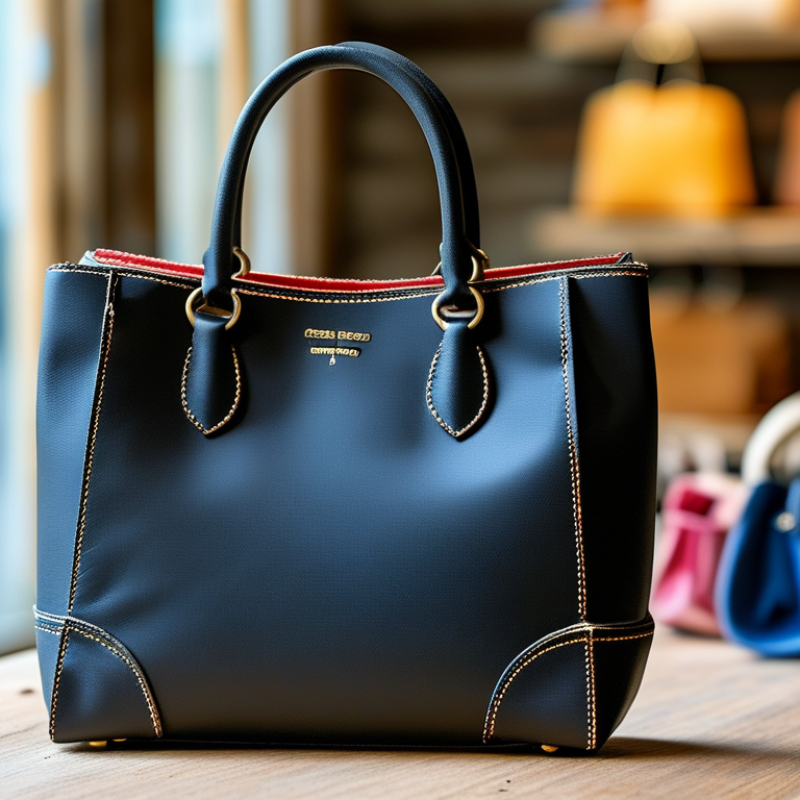
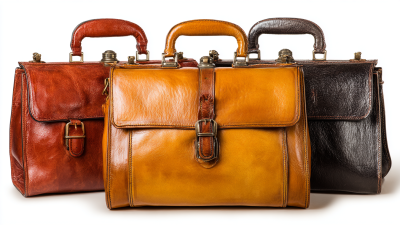
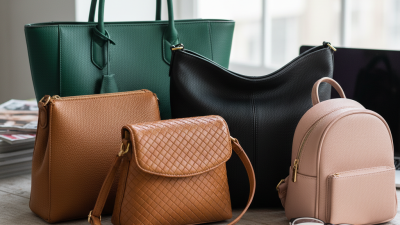
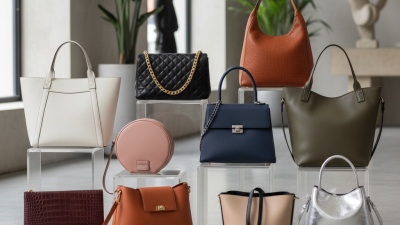
Discover our premium leather bag collection, designed for style and functionality. From chic purses, versatile tote bags, and sleek shoulder bags, to durable backpacks, stylish laptop bags, and compact makeup bags, we have it all. Explore luxurious duffel bags, practical belt bags, trendy sports bags, lunch bags, and pet bags.
Wholesale handbag buying is becoming more analytical. Buyers now compare material performance, supplier consistency, price, and customer demand before placing large orders. This is where Pu Leather Handbags remain relevant. They offer a leather-like appearance, controlled production costs, and broad design flexibility. A practical sample should feel smooth, hold its shape, and avoid a sharp chemical odor. Small details matter.
Industry data supports this changing approach. Grand View Research identifies handbags as a major accessories category influenced by e-commerce, design innovation, and changing consumer preferences. The Business Research Company’s Handbags Global Market Report also forecasts continued market expansion through the coming decade. These reports do not focus only on PU materials, but they show why wholesale buyers need scalable and adaptable product lines. Meanwhile, sustainability reports from Textile Exchange highlight growing pressure for clearer material information and more responsible sourcing. PU is not automatically sustainable. Its coating, backing fabric, durability, and production process must be checked carefully.
This guide examines top Pu Leather Handbags for wholesale buyers through a commercial lens. It considers capacity, stitching, hardware quality, color consistency, packaging, and reorder reliability. A black structured tote may sell steadily, while a bright mini bag can create seasonal interest. Yet demand is never perfectly predictable. Reports provide direction, not certainty. Supplier samples can also look better than bulk production. That risk deserves attention. Buyers should request production samples, verify specifications, and review quality records before committing. The strongest supplier is not always the cheapest. Consistency often protects margins better.
PU leather combines a textile backing with a polyurethane surface layer. The backing affects structure, while the coating controls softness, shine, and water resistance. Better materials usually show an even grain, clean edges, and minimal chemical odor. Some coatings still crack after repeated folding. That detail deserves testing.
Grand View Research estimated the global synthetic leather market at about USD 63.3 billion in 2023, with projected growth through 2030. This expansion reflects demand for consistent, scalable materials. For handbags, buyers should check coating thickness, backing weight, colorfastness, and hydrolysis resistance. A soft hand-feel is useful, but it cannot replace durability. Abrasion testing, seam-pull checks, and repeated flexing reveal practical weaknesses.
Wholesale decisions require more than a low unit price. Request material samples, production samples, carton measurements, and defect standards. Confirm minimum order quantities, color options, lead times, and replacement terms in writing. The International Organization for Standardization provides relevant testing methods, including ISO 105-X12 for color transfer. Use independent laboratory results when possible. Supplier claims alone are not enough. Ask whether the PU coating is water-based or solvent-based, then verify the documentation. Small inconsistencies can become expensive across thousands of bags.
Retail markets rarely share the same handbag priorities. According to IMARC Group, the global handbags market reached about US$72.7 billion in 2023. Its report projects continued growth through 2032. Wholesale buyers should match designs with local shopping habits, not chase every trend.
For urban boutiques, structured PU leather totes suit workwear customers. Choose reinforced handles, metal feet, and compartments for tablets and small accessories. Crossbody bags work well in younger, mobile-focused markets. Adjustable straps and secure zipper closures add practical value.
Keep it practical. In value-oriented stores, compact shoulder bags with clean stitching can support accessible pricing. Neutral black, tan, and cream usually provide dependable shelf rotation.
Fashion-led retailers may prefer soft hobo shapes, braided handles, or controlled metallic accents. Trend-focused buyers should request small trial quantities first. No assortment is perfect. Seasonal colors can attract attention, yet they may create leftover stock after one selling cycle.
The Business Research Company identifies rising disposable income and changing fashion preferences as important handbag market drivers. Buyers can test these signals through weekly sales data, customer comments, and return reasons.
Small details matter. A lining that tears easily, a strong chemical smell, or uneven edge paint can damage repeat orders. Supplier samples should be checked under store lighting and handled like real customers would.
Top PU Leather Handbags for Wholesale Buyers
How to Evaluate Quality, Durability, and Manufacturing Standards
A reliable PU leather handbag begins with the material, not its appearance. Inspect the surface under bright, even light. It should look consistent, without bubbles, peeling edges, or sharp chemical odors. Press the material gently and bend a sample several times. Quality PU leather should recover without deep cracks. A smooth finish can mislead. Ask for the material composition and thickness in writing.
Check the construction closely. Examine handle stitching, zipper movement, lining attachment, and the strength of metal fittings. Pull each handle with steady pressure, then inspect the seams for loose threads. Test several samples from different production batches. One perfect sample proves very little. In my experience, small variations often reveal weak process control. Wholesale buyers should request abrasion, colorfastness, flexing, and load tests, with dated reports from qualified testing facilities.
Manufacturing standards matter beyond the finished bag. Review factory inspection records, quality checkpoints, worker training, and corrective-action reports. A dependable supplier should explain how defects are recorded and resolved. Confirm that dimensions, hardware, packaging, and labeling match the approved sample. Random pre-shipment inspections can reduce costly surprises. Still, inspection is not a substitute for trust. I once overlooked lining density because the exterior looked excellent. That mistake reinforced a practical lesson: evaluate the inside with equal care. Keep sealed reference samples for future comparisons. һөкүмити
| Evaluation Area | Quality Dimension | Material | PU coating composition | Prefer consistently coated polyurethane over a stable textile backing. A uniform surface should have no pinholes, peeling, excessive plastic odor, or visible color variation. | Supplier material specification, production sample inspection, and laboratory coating analysis when required. | Request the material specification sheet, backing-fabric details, coating type, thickness, and a production-lot sample. | |
|---|---|---|---|---|---|---|---|
| Material | Material thickness | Typical handbag PU material is approximately 0.70–1.50 mm, depending on the bag structure, finish, and backing. Thickness should remain consistent across the panel. | Digital thickness gauge at multiple points; compare results with the approved sample. | Measure at least 10 points per selected panel and define an acceptable tolerance in the purchase specification. | |||
| Material | Surface appearance and grain | Grain pattern, gloss, color, and texture should be visually consistent. Premium finishes generally have clean edges, controlled embossing, and no excessive wrinkling. | Visual inspection under standard lighting; compare against a signed reference sample. | Inspect front panels, gussets, handles, and pocket flaps separately because surface defects may vary by cutting location. | |||
| Durability | Abrasion resistance | For frequent-use handbags, a practical target is at least 20,000 Martindale cycles without unacceptable coating breakthrough, severe gloss change, or exposed backing. | ISO 12947-2 or an agreed equivalent test method, using a material specimen representative of production. | Confirm the test load, abrasive material, endpoint, and whether results apply to the exact color and finish ordered. | |||
| Durability | Tear and tensile strength | A suitable coated fabric should provide enough strength for the intended bag weight and construction. Set project-specific minimum values rather than relying only on appearance. | ISO 1421 for coated fabrics; tear testing may be specified separately for the PU material and sewn assembly. | Ask for warp and weft results and test specimens from the actual production material, not only a generic catalog fabric. | |||
| Durability | Coating adhesion | The PU layer should not lift, blister, or separate from the backing during normal flexing and handling. A commonly used project target is at least 1.0 N/cm, subject to material design. | ISO 2411 coating adhesion test or a buyer-approved equivalent. | Review the test direction, specimen conditioning, failure mode, and minimum acceptance value in the technical agreement. | |||
| Durability | Flex cracking resistance | The surface should remain free from visible cracks after repeated bending. Higher-flexibility PU is generally preferable for soft bags and folded gussets. | Repeated-flex testing, such as ISO 7854 or an agreed equivalent, after temperature conditioning where appropriate. | Test samples at handles, folds, corners, and piping areas because these locations experience the greatest movement. | |||
| Color Performance | Dry and wet crocking | For everyday handbags, a target of Grade 4 or better for dry rubbing and Grade 3–4 or better for wet rubbing is a useful commercial benchmark. | ISO 105-X12 or an agreed color-transfer method using the finished material. | Check dark, saturated, and metallic colors separately; review transfer onto both white and light-colored fabrics. | |||
| Color Performance | Light fastness | A minimum Blue Wool Grade 4 is commonly suitable for general fashion use; stronger exposure requirements may call for Grade 5 or above. | ISO 105-B02 xenon-arc light-fastness testing. | Match the grade to the expected retail environment and confirm whether the result covers the exact colorway. | |||
| Construction | Stitch density and seam quality | Even stitches, secure back-tacking, clean seam allowances, and no skipped stitches. Many commercial handbags use approximately 8–12 stitches per 25 mm, depending on material and design. | Visual inspection and seam-strength testing on representative assemblies. | Inspect stress points such as handle joins, zipper ends, strap anchors, corners, and pocket openings. | |||
| Construction | Handle and strap attachment | Attachment points should be reinforced with suitable backing, box-X stitching, rivets, or another approved construction. The strap must not pull away from the body during use. | Static load test based on bag size and intended carrying capacity; record load, duration, and failure mode. | Define a target load for handles and shoulder straps, then test completed bags rather than loose components only. | |||
| Hardware | Zippers, rings, buckles, and snaps | Hardware should operate smoothly, remain firmly attached, and show no sharp edges, flaking finish, or premature corrosion under the agreed test conditions. | Cycle testing, pull testing, visual inspection, and corrosion testing where required by the destination market. | Operate every zipper and closure during inspection; check plating consistency and confirm the base metal and finish specification. | |||
| Function | Load capacity and shape retention | The finished bag should carry its declared practical load without excessive stretching, seam opening, lining separation, or permanent deformation. | Filled-bag load test using the agreed load, suspension position, and test duration. | Use realistic contents and test both empty and loaded dimensions against the approved measurement chart. | |||
| Safety and Compliance | Restricted substances | Materials, dyes, coatings, adhesives, and metal components should comply with the destination market's chemical restrictions. Requirements commonly include REACH restrictions for the European Union and applicable U.S. state or federal rules. | Third-party chemical testing based on the destination market, product composition, and current restricted-substance list. | Obtain recent test reports tied to the actual material, color, hardware, and production supplier; do not rely only on a general declaration. | |||
| Safety and Compliance | Odor and volatile substances | The product should have no strong, persistent solvent or plastic odor after normal airing. Odor limits should be agreed before bulk production. | Controlled sensory evaluation and, when necessary, laboratory VOC or chemical-emission testing. | Evaluate samples after packaging and after 24–48 hours of airing; retain a sealed reference sample for comparison. | |||
| Manufacturing | Dimensional consistency | Finished dimensions, handle drop, strap length, pocket placement, and logo position should remain within the approved tolerance, commonly around ±3–5 mm for many bag components. | Measurement against a signed technical specification and approved golden sample. | Set tighter tolerances for closures and hardware alignment, and wider tolerances only where the material or construction requires them. | |||
| Manufacturing | Quality-control system | A reliable production process includes incoming-material checks, first-piece approval, in-line inspection, final inspection, defect classification, and traceable corrective action. | Factory audit, review of inspection records, and pre-shipment inspection using an agreed sampling plan. | Confirm who approves color, material, hardware, packaging, and shipment release; request records for the actual purchase order. | |||
| Packaging | Protection during transport | Each handbag should be protected from friction, moisture, compression, and hardware impressions. Packaging should preserve shape without trapping excessive moisture. | Packaging inspection, carton-drop assessment when required, and simulated transport review. | Check the bag after a packed-carton trial and verify carton dimensions, gross weight, inner protection, and labeling accuracy. | |||
| Wholesale Decision | Overall quality rating | Use a weighted score: material and appearance 25%, durability 25%, construction 25%, compliance 15%, packaging and consistency 10%. Set a minimum passing score before placing a bulk order. | Documented supplier scorecard based on sample inspection, test reports, and production audit results. | Approve only when critical defects are zero or within the agreed limit and all mandatory compliance documents are current. |

Top PU Leather Handbags for Wholesale Buyers
Wholesale buyers should compare landed cost, not only the factory quote. IMARC Group valued the global handbag market at approximately USD 78.46 billion in 2023. Demand remains strong, but price pressure is real. For PU leather styles, request pricing at 100, 300, and 1,000 units. Many suppliers reduce costs at higher quantities. Minimum order quantities often range from 50 to 500 pieces per color. Confirm whether the MOQ applies per design, color, or total order. A low price can still be wrong. Thin coating, weak stitching, and uneven edges create expensive returns.
Supplier terms deserve equal attention. Ask for material thickness, backing composition, hardware specifications, sample fees, and production lead time. Grand View Research reports continued growth in synthetic leather, supported by fashion and furniture demand. This supports wider sourcing options, but not every PU material performs equally. Require a pre-production sample and written quality standards. Payment terms may include a deposit before production and the balance after inspection. Use an independent inspection when the order is substantial. It costs money, yet it can reveal peeling, odor, stains, or incorrect measurements. Some buyers skip this step. That is understandable, but risky.
Tips: Compare three written quotations. Check zipper strength by repeated opening. Photograph approved samples. Negotiate replacement terms before payment. Allow extra time for holidays and port delays. Recheck carton dimensions; freight estimates are often imperfect. Avaliable colors may change, so confirm stock before advertising.
Wholesale buyers need more than attractive PU leather handbags. Packaging protects the finish, shape, and hardware during transit. I inspect sample cartons before approving a larger order. A handbag should sit upright, with tissue paper around handles and metal fittings. Avoid excessive moisture inside sealed cartons. PU surfaces can develop marks when packed tightly for too long. That lesson came from a shipment with flattened corners. The cartons looked fine. The bags did not.
Use individual dust bags or clean protective sleeves, then add dividers between colors. Carton labels should show the style code, color, quantity, and carton number. Clear labels reduce receiving errors. Choose strong, stackable cartons with corner protection. Shipping plans should match the sales calendar, not only the lowest freight quote. Sea freight may lower unit cost, but it needs more lead time. Air freight helps with urgent replenishment, though margins can suffer. Confirm carton dimensions, gross weight, and destination paperwork before booking. Requirements vary by destination. I would not guess. Ask the carrier or customs specialist.
Inventory planning starts with realistic demand, not optimistic forecasts. Keep core colors available, but test seasonal shades in smaller quantities. Set reorder points using sales speed, supplier lead time, and safety stock. A simple spreadsheet can track received units, damaged pieces, reserved stock, and available stock. Count cartons when they arrive. Then inspect random bags inside. My earlier plan overestimated fast-moving colors and missed a slower neutral shade. It was not dramatic, but cash stayed tied up. Review inventory weekly and adjust purchase quantities before the next production cycle.
Estimated planning benchmarks for a 1,000-unit wholesale order, shown in USD per handbag. Actual costs vary by product specification, destination, carton size, and shipping terms.
Packaging and freight costs are allocated per unit. Inventory carrying cost is estimated at 2% of landed product value for one month, a commonly used short-term planning assumption.