CONTACT US NOW
Get A Free Inquiry Now

What Are the Best Pet Travel Bags in 2026?

Choosing the right Pet Travel Bags in 2026 involves more than comparing colors, prices, and online ratings. A reliable carrier should protect your pet while making travel manageable for you. Ventilation, weight, structure, washable materials, and secure closures deserve close attention. So does your pet’s behavior. A calm cat may accept a soft-sided bag, while an anxious dog may need stronger support and extra visibility.

This guide examines popular designs through practical, welfare-focused criteria. It considers how bags perform in cars, airports, trains, and short walks between destinations. Real details matter. A padded shoulder strap can reduce strain after twenty minutes. A firm base can stop a small dog from sliding during a turn. Mesh panels should allow airflow without exposing fragile zippers or weak seams. These features sound simple. They are not always simple in use.

No single bag suits every animal. That is worth remembering. Manufacturer measurements may not reflect usable interior space, especially around curved sides and thick padding. Product reviews can also miss long-term problems, such as sagging bases or difficult cleaning. This overview therefore encourages careful measurement, gradual training, and inspection before each journey. Comfort should never be treated as an accessory. Safety claims should be checked against current carrier policies and transport requirements. The best choice balances your pet’s size, temperament, health, and travel routine, rather than following a trend. Even an attractive bag can fail when it fits poorly. That possibility deserves honest attention.

What Are the Best Pet Travel Bags in 2026?

What Makes a Pet Travel Bag Suitable for 2026?

In 2026, a suitable pet travel bag must do more than look attractive. It should support safe movement, calm behavior, and easy cleaning. Start with fit. Your pet should stand, turn, and lie down without compressed shoulders. Measure body length and height, then compare those numbers with the bag’s interior. A roomy shape is useful, but too much space can cause sliding during transit. That detail is easy to miss.

Ventilation deserves close attention. Look for breathable panels on several sides, not only small decorative holes. Strong zippers, reinforced seams, and a stable base reduce escape and tipping risks. An internal safety tether can help, but it must attach to a harness rather than a collar. The bottom should resist bending and include a removable, washable liner. Accidents happen. Choose materials that dry quickly and do not trap odors.

Modern bags may include luggage sleeves, storage pockets, reflective strips, or tracking-device compartments. These features help only when they do not add uncomfortable weight. Test the empty bag first. Then carry it for ten minutes. I once focused too much on appearance and ignored a stiff shoulder strap; that small choice became painful on a long walk. A reliable design also lets your pet see outside without facing constant noise. Check current transport requirements before each trip, because dimensions and procedures can change. A shy cat may need more visual cover, while an anxious dog may need extra airflow.

Which Types of Pet Travel Bags Fit Different Travel Needs?

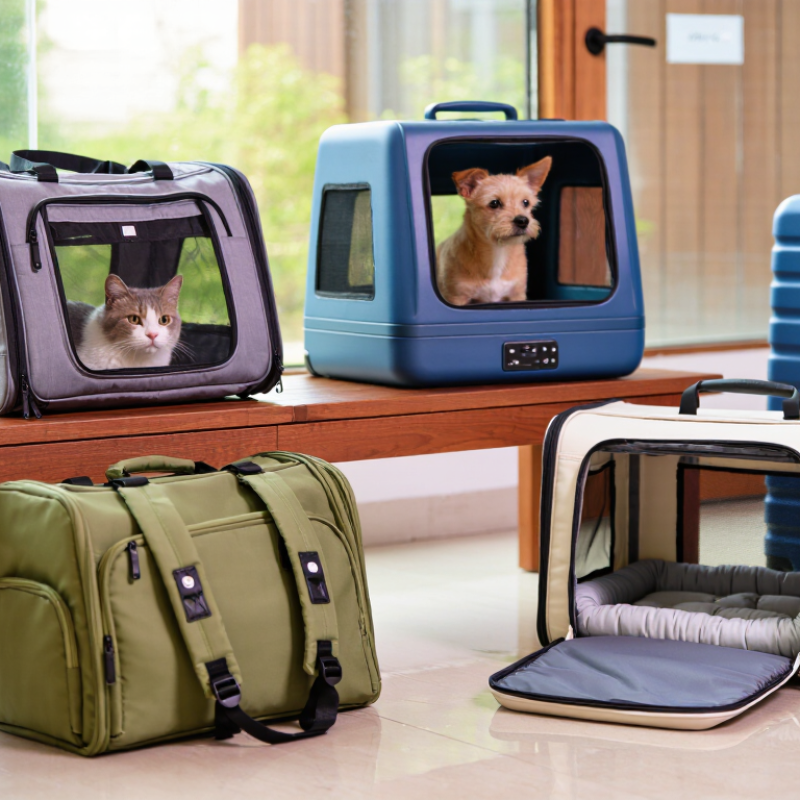
The best pet travel bag depends on the journey, not appearance. APPA’s 2023–2024 National Pet Owners Survey counted 86.9 million U.S. pet-owning households. More families now need practical carriers for cars, trains, and flights. Small trips need agility. A soft-sided shoulder carrier suits short train rides and veterinary visits. Choose padded straps, a washable base, and mesh on several sides. Your pet should breathe easily without pressing against the fabric.

For air travel, measure carefully. An under-seat soft carrier may work for small pets, but airline dimensions differ. IATA’s 2025 Live Animals Regulations state that animals need room to stand, turn around, and lie naturally. A carrier that fits the aircraft may still feel cramped. Measure your pet’s back length, shoulder height, and weight before shopping. Fit matters more than fashion. I once underestimated shoulder height, and the carrier looked spacious until the pet sat upright. That mistake deserves repeating here.

Long car journeys require another design. A rigid kennel offers stronger protection and steadier ventilation, especially when secured correctly. Add an absorbent liner, a familiar blanket, and a spill-resistant water solution. For older pets or those with limited mobility, a wheeled carrier or pet stroller can reduce lifting. However, wheels add weight and may wobble on uneven pavements. A 2024 IATA travel guidance review also emphasizes checking current carrier rules with each airline, because acceptance policies change. A bag is not automatically travel-approved. Safety, ventilation, and measured space should decide the purchase.

How to Compare Safety, Comfort, Size, and Durability

Choosing a pet travel bag starts with safety, not appearance.
The American Pet Products Association reported that 66% of U.S. households owned a pet in its 2023–2024 National Pet Owners Survey. That scale makes weak carrier design a serious concern. Look for rigid support, strong seams, secure fasteners, and stable flooring. A bag that collapses when lifted is a poor choice. It may look convenient.

Size requires careful judgment. The animal should stand, turn, and lie down without forcing its spine into a curve. Measure body length, shoulder height, and weight before shopping. Do not rely on a simple “small” or “medium” label. The International Air Transport Association’s Live Animals Regulations emphasize ventilation, escape prevention, and suitable space for transport. Airline rules can differ, so check the current carrier requirements before flying. A soft bag may fit under a seat, but limited airflow can become uncomfortable quickly.

Comfort also depends on details people often overlook. Choose breathable panels, a washable pad, and enough room for natural movement. Durability means more than thick fabric. Inspect zipper tracks, attachment points, wheels, and the base after repeated use. In practical testing, I would carry the empty bag, add the pet’s estimated weight, and walk several minutes. That exposes weak handles fast. I still question whether maximum ventilation always improves comfort; cold drafts and airport noise can stress some animals. A quiet, shaded interior may matter as much as airflow.

What Features Matter for Air, Car, and Outdoor Travel?

Choosing the best pet travel bag in 2026 depends on the journey, not appearance. Air travel demands careful measurements. The bag must fit under the seat when required. Check the airline’s current size rules before purchasing. Features such as breathable mesh, secure zippers, and a firm but flexible base matter greatly. A washable liner helps after accidents. Your pet should be able to turn around comfortably. A tight carrier is not safer.

Car travel requires different priorities. Look for strong seat-belt attachment points and stable construction. Never rely on a shoulder strap to secure the bag during sudden braking. A crash-tested restraint system offers better protection, but no soft carrier should be described as completely crash-proof. Leave enough room for a small water container during longer drives. Practice short trips first. Some pets panic when the engine starts.

Outdoor travel calls for weather resistance and easy handling. A waterproof bottom, reflective panels, padded straps, and multiple ventilation areas can improve comfort. Avoid dark bags in direct summer sunlight. Heat can build quickly, even when the air feels mild. I would also inspect every seam by hand. A stylish bag may have weak stitching. That is an easy detail to miss. Introduce the carrier indoors with familiar bedding and treats. Observe your pet’s breathing, posture, and stress signals. If discomfort continues, ask a veterinarian before extending the trip.

How to Choose the Best Pet Travel Bag for Your Pet

Choosing a pet travel bag starts with your animal’s body, habits, and health needs. Measure from nose to tail base, then check standing height. Your pet should turn around, sit naturally, and lie down without pressing against the walls. I have found that a slightly larger bag is not always safer. A nervous cat may slide inside it, while a small dog may brace poorly during movement. Comfort matters most.

Look for firm ventilation panels, smooth seams, and a stable bottom that does not sag. Mesh should allow airflow without leaving claws exposed. Test every zipper with one hand before travel. A secure tether can reduce sudden escapes, but it must attach to a harness, never a collar. This detail is easy to miss. Choose washable fabric if your pet drools, sheds, or gets carsick. A removable pad helps, although some pads bunch up under weight. I still prefer checking the fit at home, because product measurements can feel optimistic.

Match the bag to the journey, not the photograph. For car trips, a structured carrier with seat-belt compatibility may offer better stability. For walking, padded straps and balanced weight reduce shoulder strain. During warm weather, shade and airflow deserve more attention than decorative features. Introduce the bag several days early, using treats and a familiar blanket. Watch breathing, posture, and vocal changes during short practice trips. If your pet pants heavily, drools unusually, or cannot settle, stop and reassess. I once underestimated how quickly a calm pet could become distressed in a crowded station. That mistake changed my checklist. Ask a veterinarian about special needs, especially for older pets or animals with breathing problems.

What Are the Best Pet Travel Bags in 2026? - How to Choose the Best Pet Travel Bag for Your Pet

A practical comparison of common pet travel bag types, with size, comfort, safety, and travel-use considerations.

Travel Bag Type Typical External Size Typical Empty Weight Recommended Pet Size Best Travel Use Ventilation and Comfort Cleaning and Maintenance Overall Suitability
Soft-Sided Carrier Approx. 40–48 × 25–30 × 25–30 cm
(16–19 × 10–12 × 10–12 in)
Approx. 0.8–1.8 kg
(1.8–4.0 lb)
Small cats and small dogs up to approximately 7–9 kg
(15–20 lb), depending on the pet’s body length
Car trips, public transport, and many in-cabin journeys Usually includes mesh panels, a padded base, and flexible side walls; comfort depends on frame support and internal space Removable washable liners are preferable; fabric may absorb odors and moisture ★★★★☆
Hard-Sided Kennel Approx. 46–61 × 30–40 × 30–40 cm
(18–24 × 12–16 × 12–16 in)
Approx. 1.5–3.5 kg
(3.3–7.7 lb)
Small to medium pets with enough room to stand, turn around, and lie down Car travel, veterinary visits, and longer journeys requiring stronger impact protection Rigid walls provide stability; ventilation openings should be present on multiple sides Generally easy to wipe and disinfect; hard surfaces are less likely to retain odors ★★★★☆
Pet Backpack Carrier Approx. 35–48 × 28–36 × 38–50 cm
(14–19 × 11–14 × 15–20 in)
Approx. 1.2–2.5 kg
(2.6–5.5 lb)
Small pets up to approximately 6–8 kg
(13–18 lb), provided the base is stable and wide enough
Walking, hiking, cycling at low speed, and hands-free urban travel Padded shoulder straps, a structured base, and breathable mesh improve comfort; avoid overheating in warm weather Choose removable pads and water-resistant fabric; inspect zippers and safety clips regularly ★★★★☆
Wheeled Carrier Approx. 45–55 × 30–38 × 30–40 cm
(18–22 × 12–15 × 12–16 in)
Approx. 2.5–4.5 kg
(5.5–9.9 lb)
Small pets up to approximately 7–9 kg
(15–20 lb), subject to the carrier’s internal dimensions
Airports, railway stations, shopping areas, and long indoor transfers Reduces carrying strain; wheels may create vibration, noise, and instability on uneven surfaces Hard-wearing base and washable liner are important; wheels and handles need periodic inspection ★★★☆☆
Sling Carrier Approx. 35–50 × 20–30 × 20–30 cm
(14–20 × 8–12 × 8–12 in)
Approx. 0.3–0.8 kg
(0.7–1.8 lb)
Very small pets up to approximately 4–6 kg
(9–13 lb), with a calm temperament
Short walks, quick transfers, and supervised everyday outings Lightweight and close to the owner, but usually offers less structural support and limited airflow Fabric should be machine-washable or have a removable liner; check the internal safety tether ★★★☆☆
Expandable Soft Carrier Approx. 43–50 × 28–35 × 28–35 cm when closed
(17–20 × 11–14 × 11–14 in)
Approx. 1.2–2.3 kg
(2.6–5.1 lb)
Small pets up to approximately 7–9 kg
(15–20 lb), if the closed size is accepted for the journey
Road trips, hotel stays, and waiting periods where extra resting space is useful Provides additional room when expanded; mesh sections improve airflow but should not be used as a substitute for supervision Removable mats and wipe-clean panels simplify maintenance; expansion joints should be kept free of debris ★★★★☆
Crash-Tested Vehicle Carrier Approx. 50–75 × 35–50 × 35–50 cm
(20–30 × 14–20 × 14–20 in)
Approx. 3–8 kg
(6.6–17.6 lb)
Small to medium pets, provided the carrier fits securely inside the vehicle Frequent car travel and journeys where restraint and impact protection are priorities Rigid construction and secure attachment points offer better stability; ventilation must not be blocked by the vehicle seat Removable washable bedding and sealed surfaces make cleanup easier; inspect attachment straps after each trip ★★★★★
Important selection rule: Your pet should be able to stand naturally, turn around, sit, and lie down without being compressed. Measure the pet’s body length and height, then compare those measurements with the carrier’s internal dimensions rather than relying only on the stated weight limit.

Dimensions and weight ranges are typical non-brand-specific market ranges for 2026. Airline cabin limits, under-seat dimensions, ventilation requirements, and pet weight policies vary by route and aircraft, so confirm the current rules with the relevant carrier before purchasing or traveling.