CONTACT US NOW
Get A Free Inquiry Now

Why Choose Pet Travel Bags for Safe Pet Travel?

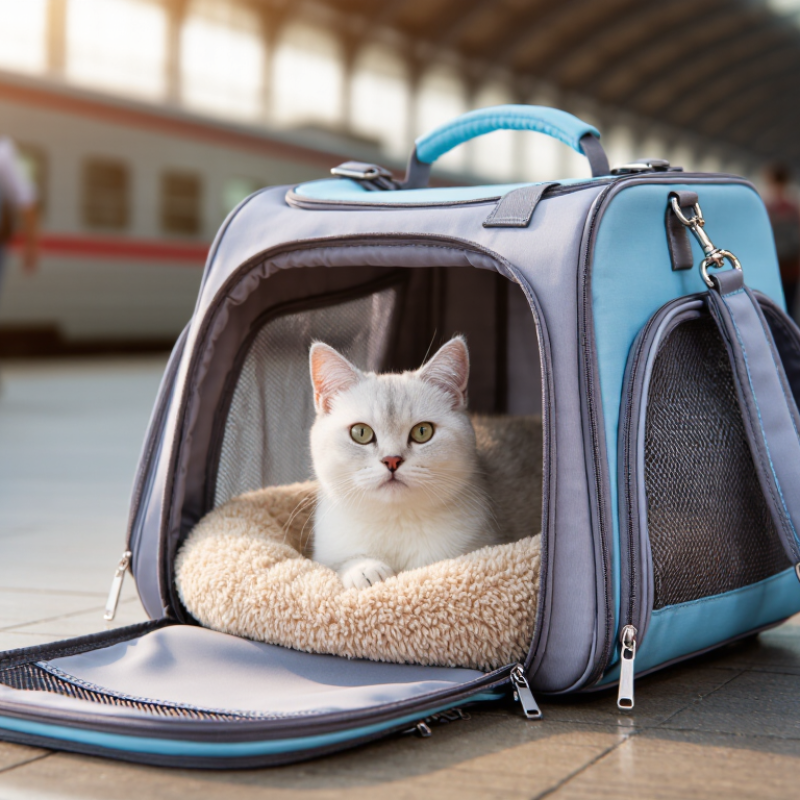
Safe travel begins with comfort, control, and a realistic understanding of your pet’s needs. Pet Travel Bags offer a practical way to move cats and small dogs through airports, train stations, and busy streets. They can provide familiar shelter when strange sounds and crowded spaces create stress. However, a stylish bag is not automatically a safe one.

Dr. Marty Becker, a respected veterinarian and pet-care expert, once said, “Pets are not our whole life, but they make our lives whole.” That belief should guide every travel decision. A suitable bag needs strong ventilation, secure closures, supportive flooring, and enough room for natural movement. Your pet should be able to turn around and settle comfortably. The shoulder straps should not cut into your body. The bottom should stay stable when you walk.

Small details matter. Check the stitching before departure. Test the carrier at home. Place a familiar blanket inside. Watch your pet’s breathing and body language during short practice trips. No bag solves every problem. I would not choose one based only on appearance, even when the design looks convenient. Some models feel spacious but collapse under weight. Others ventilate well but lack support.

Reliable Pet Travel Bags should match your pet’s size, temperament, and travel conditions. They should also meet the current requirements of your transportation provider. A careful choice reduces avoidable stress, but observation remains essential. Your pet may still dislike travel. That is not failure. It is useful information.

Why Choose Pet Travel Bags for Safe Pet Travel?

Pet Travel Demand: APPA Reports Pets in 66% of U.S. Households (2023–24)

Why Choose Pet Travel Bags for Safe Pet Travel?

The American Pet Products Association’s 2023–2024 National Pet Owners Survey reports pets in 66% of U.S. households. That equals about 86.9 million homes. Pet movement is no longer a niche concern. The same association reported $147 billion in U.S. pet industry spending during 2023, showing how seriously owners invest in daily care.

A pet travel bag can turn a crowded station or car ride into a more controlled space. Look for breathable panels, strong fasteners, padded support, and a washable, leak-resistant base. The carrier should allow natural posture. Your pet should not be pressed against the roof or sides. Small details matter. A loose zipper can become a serious problem.

Veterinary travel guidance also supports gradual acclimation before departure. Place the bag at home, add a familiar blanket, and begin with short trips. Never assume a stylish bag is automatically safe. Airline and transport requirements can differ, even for similar routes. APPA’s 2023–2024 survey shows widespread pet ownership, while its industry spending report reflects rising attention to pet wellbeing. Still, owners may overlook temperature, ventilation, or stress signals. A practical check before leaving is simple: observe breathing, posture, and comfort for several minutes. Safety is not perfect. It requires preparation, inspection, and sometimes changing the travel plan.

Why Choose Pet Travel Bags for Safe Pet Travel?

Pet Travel Demand: U.S. Pet Ownership Remains Broad Across Households

In the 2023–24 survey period, 66% of U.S. households owned at least one pet. This large pet-owning population supports the need for practical travel solutions, including secure, comfortable pet travel bags for trips by car, public transport, or air.

Source: American Pet Products Association, National Pet Owners Survey. Figures show the percentage of U.S. households owning pets.

Bag Safety Basics: IATA LAR 2024 Rules for Ventilation and Security

Why Choose Pet Travel Bags for Safe Pet Travel?

A pet travel bag can reduce stress during airport transfers and short cabin journeys. However, comfort never replaces structural safety. The 2024 IATA Live Animals Regulations emphasize suitable ventilation, secure construction, and animal welfare.

Ventilation openings should allow steady airflow without exposing paws or creating escape points. The bag should also remain upright when lifted. A sagging base can restrict breathing and cause unnecessary anxiety.

Soft bags may be accepted in the cabin, but airline approval is still essential. IATA LAR does not automatically approve every commercial bag.

Security deserves equal attention.

Check every zipper, seam, buckle, and mesh panel before departure. A curious cat may test weak points within minutes. The closure should resist accidental opening and remain accessible to handlers when necessary.

Avoid sharp edges, loose decorations, and materials that can tear easily. Place absorbent bedding inside, but do not overfill the bag. Your pet needs enough room to stand, turn, and rest naturally.

Tips: Measure your pet while standing and turning. Confirm the airline’s current size limits. Ask whether the bag is permitted for your route. Practice at home with short sessions. I used to think extra padding always improved comfort. It can reduce usable space instead. Check airflow after adding bedding, and inspect the bag again before leaving.

Airline Acceptance: IATA LAR 2024 and Carrier Size Limits

Why Choose Pet Travel Bags for Safe Pet Travel?

Airline acceptance depends on more than a carrier’s appearance. The IATA Live Animals Regulations 2024 provide practical standards for safe animal transport. They emphasize secure construction, proper ventilation, absorbent bedding, and enough space for natural movement. A pet should stand, turn, sit, and lie comfortably. That sounds simple. It is often overlooked.

Cabin travel adds another limit: the carrier must fit under the seat. Airlines set their own maximum dimensions, and these can vary by aircraft, route, and cabin layout. A soft-sided pet travel bag may compress slightly, but it must not restrict your pet’s breathing or movement. Measure the bag when fully expanded. Confirm the permitted length, width, and height before purchasing a ticket. Acceptance is never automatic.

In practical preparation, place the bag on the floor and observe your pet inside it. Check whether the head touches the top or the body presses against the sides. Add a washable absorbent pad, but avoid bulky bedding that reduces space. Secure every zipper and inspect the ventilation panels. I once assumed a smaller carrier would be easier for airport handling; that choice would have reduced comfort during a long wait. A better approach is to compare your pet’s measurements with the airline’s written limits, then confirm approval directly. Policies can change, and online size charts may not reflect the aircraft assigned that day.

Why Choose Pet Travel Bags for Safe Pet Travel? - Airline Acceptance: IATA LAR 2024 and Carrier Size Limits

Travel Requirement Verified Requirement or Principle Practical Measurement or Data Why a Suitable Pet Travel Bag Helps
Cabin acceptance IATA Live Animals Regulations (LAR) provide transport guidance, but cabin-pet acceptance and maximum carrier dimensions are set by the operating airline and may vary by aircraft. There is no single universal IATA maximum size for an in-cabin pet carrier. The carrier generally must fit completely under the seat in front of the passenger. Soft-sided construction can make it easier for the carrier to conform to the available under-seat space, provided the airline permits that design.
Carrier size selection The carrier must be large enough for the animal to remain in a natural position without being excessively oversized for the approved travel location. Measure the animal and compare its height and length with the carrier's usable internal dimensions, not only the external dimensions. A structured base helps preserve usable floor space, while flexible panels may help meet a specific under-seat height limit.
Natural posture For air transport, the animal should have enough room to stand, turn around normally, sit, and lie down in a natural position. Check the animal inside the carrier before travel; the shoulders, ears, and back should not be forced against the carrier roof or sides. A well-designed travel bag reduces pressure points while retaining a stable shape during handling.
IATA LAR kennel-sizing method For an air-transport kennel, the commonly used IATA sizing method is based on the animal's measurements rather than a universal pet-size chart. Internal length: A + ½B; internal width: 2C; internal height: D. A = nose to tail-root length, B = ground to elbow height, C = widest body width, D = standing height. Using measured dimensions helps prevent choosing a bag that is attractive but too small for safe transport.
Example sizing calculation The calculation below is an example based on an animal's measurements and is not an airline cabin limit. If A = 45 cm, B = 12 cm, C = 18 cm, and D = 30 cm: length = 51 cm, width = 36 cm, and height = 30 cm. The resulting dimensions should still be checked against the airline's approved under-seat space and carrier policy.
Ventilation The carrier must provide adequate airflow, and ventilation openings must remain unobstructed and secure during handling. Inspect ventilation panels on multiple sides and ensure that fabric, blankets, or luggage cannot block the openings. Mesh ventilation panels support airflow while allowing the animal to remain enclosed and supervised.
Escape prevention Doors, zippers, fasteners, and seams must resist accidental opening and prevent the animal from escaping. Test every zipper and attachment point before departure, including the carrier's shoulder strap and internal safety tether if provided. Lockable zipper pulls, reinforced seams, and an internal tether can add security during airport transfers, but the tether must not restrict breathing or movement.
Leak resistance and hygiene The carrier should contain normal moisture and remain clean and sanitary throughout the journey. Use a waterproof or leak-resistant base with absorbent bedding. Avoid loose materials that could block ventilation or be swallowed. A removable, wipe-clean base makes accidents easier to manage without dismantling the entire carrier.
Structural stability The carrier must remain secure during lifting, movement, and storage, with no sharp edges or hazardous projections. Check the base, frame, handles, seams, and attachment points under the animal's full carried weight. A reinforced frame and non-slip base improve stability while reducing the chance of collapse or tipping.
Pre-flight approval Passengers should confirm the operating airline's current pet policy, route restrictions, carrier dimensions, reservation process, and required documents before travel. Approval may depend on the aircraft, cabin availability, destination, animal type, total pet-and-carrier weight, and applicable national rules. A compliant design improves preparedness, but no carrier can guarantee acceptance without confirmation from the operating airline.

Important: IATA LAR guidance applies primarily to the safe transport of live animals. Cabin carrier dimensions and acceptance conditions are controlled by the operating airline and may change by route or aircraft.

Pet Health in Transit: CDC and AVMA Guidance on Stress and Hydration

Why Choose Pet Travel Bags for Safe Pet Travel?

Pet Health in Transit: CDC and AVMA Guidance on Stress and Hydration

A suitable pet travel bag can reduce handling, noise, and sudden movement during transit. According to the 2023–2024 National Pet Owners Survey, 66% of U.S. households owned a pet. More families may travel with animals. Stress is easy to miss. Watch for rapid breathing, drooling, trembling, or repeated scratching.

CDC guidance recommends checking destination health requirements and carrying essential medical records. AVMA travel guidance also supports using a secure, well-ventilated carrier that allows the pet to stand, turn, and lie down naturally. Add familiar bedding, but avoid overcrowding the space. Offer water before departure and during longer trips. Small amounts are often easier to manage. Water matters.

Keep the bag away from direct sunlight and hot vehicle surfaces. Never leave a pet alone in a parked vehicle. Before leaving, let the animal enter the bag at home, then extend practice time gradually. During travel, check breathing, posture, and gum moisture. A common mistake is offering too much food or water immediately before movement. Some animals need more frequent breaks than expected. That uncertainty deserves respect. A bag supports safety, but it cannot remove every travel risk.

Choosing and Using a Bag: A Data-Based Fit and Safety Checklist

Why Choose Pet Travel Bags for Safe Pet Travel?

Choosing and Using a Bag: A Data-Based Fit and Safety Checklist

A well-chosen travel bag can reduce movement, noise, and escape risks during transport. Measure your pet from chest to rump, then measure standing height from floor to head. Add enough room for one natural turn. The bag should not force the neck down. It should also have a firm base, strong seams, breathable panels, and secure closures. Check the stated weight limit against your pet’s current weight, not an old estimate.

Tips

Place the bag indoors for several days before travel. Add a familiar washable cloth, but avoid loose items that could cover the face. Observe breathing, posture, drooling, and repeated scratching during a short trial. Stop if your pet shows distress. A calm trial matters more than a perfect measurement. It is easy to overlook this.

For added reliability, test the loaded bag by lifting it gently and checking whether the base bends sharply. Inspect zippers, clips, and ventilation before every trip. Keep the bag upright and never block its air panels. A snug harness attachment may help prevent escapes, but it must not restrict movement or breathing. A bag that fits on paper may still feel unsafe in practice. Recheck the fit after grooming, weight changes, or seasonal coat growth. Temperature also matters; direct sunlight can heat a small carrier quickly. Keep observing.