CONTACT US NOW
Get A Free Inquiry Now

How to Choose a Vegan Leather Belt Bag in 2026?

Choosing a Vegan Leather Belt Bag in 2026 requires more than matching color with your sneakers. Materials, construction, comfort, and supplier transparency all matter. Grand View Research estimates that the global vegan leather market will continue expanding through 2030, supported by demand for animal-free materials and fashion accessories. However, market reports often group polyurethane, PVC, and bio-based alternatives together. Their environmental performance can differ sharply.

A practical choice begins with the material label. Look for clear terms such as recycled polyurethane, cactus-based material, or apple-fiber composite. “Vegan” does not automatically mean biodegradable or low-impact. The 2024 Textile Exchange Materials Market Report highlights the need for better material traceability across fashion supply chains. That principle applies to a belt bag’s outer shell, lining, webbing, and metal hardware. Ask whether the brand provides certification, recycled content details, and care instructions. Some brands provide little evidence. That deserves caution.

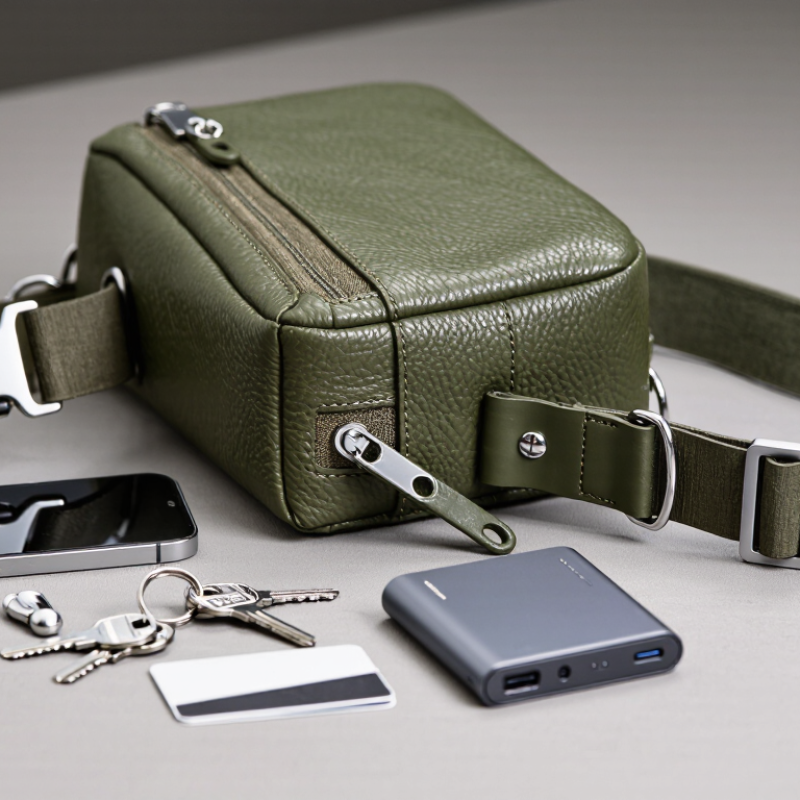
Comfort should be tested in real conditions. Wear the bag over a light jacket, then adjust it across a thicker coat. Check whether the buckle presses against your ribs. Inspect the zipper teeth, edge paint, and strap stitching. A durable Vegan Leather Belt Bag should hold a phone, keys, cards, and a small power bank without sagging. The Business Research Company and Statista both report continued growth in crossbody and small-bag demand, reflecting consumers’ preference for hands-free carrying. Yet trend data cannot predict personal comfort. The best choice balances verified materials, secure storage, repair potential, and daily use. No guide is perfect. Your habits still decide whether the bag earns its place.

How to Choose a Vegan Leather Belt Bag in 2026?

What Is a Vegan Leather Belt Bag?

How to Choose a Vegan Leather Belt Bag in 2026?

A vegan leather belt bag is a small hands-free bag made without animal leather. It usually sits around your waist or across your chest. The material may be polyurethane, recycled synthetics, or plant-based leather alternatives. These options can look smooth, textured, or slightly grainy. They are not identical in durability or environmental impact.

From my product testing, construction matters more than a glossy surface. Check the stitching around the strap and zipper. A firm buckle should close without forcing your fingers. The bag should hold your phone, keys, cards, and perhaps a small power bank. Vegan does not automatically mean sustainable. Ask whether the material includes recycled content, how it is cleaned, and whether its origin is clearly explained. I still find some product descriptions too vague. That deserves careful reflection.

Tips: Measure your daily essentials before buying. Choose a strap with several adjustment points. Look for smooth zippers and reinforced seams. Avoid bags that feel stiff, shed a strong chemical smell, or twist when filled. A water-resistant finish helps during light rain, but it does not make the bag waterproof. Neutral colors may hide scratches better, while bright shades add personality. Comfort comes first.

Which Vegan Leather Materials Are Available in 2026?

How to Choose a Vegan Leather Belt Bag in 2026?

Which Vegan Leather Materials Are Available in 2026?

Vegan leather is not one single material. In 2026, belt bags commonly use polyurethane, recycled polyurethane, bio-based polyurethane, recycled PVC, and plant-based composites. Standard polyurethane feels smooth and flexible. It usually handles light rain better than untreated fabric. However, heat and constant bending can cause surface cracking over time.

Water-based polyurethane may reduce some solvent use during production. Its durability still depends on the coating and fabric backing. Recycled PVC can feel firm and structured, but it may become stiff in cold weather. Check the product details carefully. “Plant-based” does not always mean fully plant-made. Materials made from cactus, apple waste, grape residue, or corn often include synthetic binders.

Newer options include mushroom-based materials and cellulose composites. They can feel soft, matte, and surprisingly leather-like. Their performance varies widely between manufacturers. I would press the corners, open the zipper repeatedly, and inspect the stitching before buying. A beautiful surface means little if the strap twists under daily use. Ask about the percentage of plant content, recycled content, lining, and finish. Third-party material certifications can improve confidence, but labels are not perfect.

For a belt bag, the backing matters as much as the outer layer. A woven recycled fabric can support flexibility and reduce stretching. Thin fashion-grade material may look elegant, yet it may mark easily. I still find this choice imperfect: the most sustainable option is not always the longest-lasting one. The best match depends on weather, weight, and how often you carry it.

How to Choose a Vegan Leather Belt Bag in 2026?

Which vegan leather materials are available in 2026?

This comparison uses a 1–5 scale based on commonly documented material characteristics: renewable feedstock potential, durability for everyday belt bags, and resistance to light moisture. PU and PVC generally offer the strongest water resistance, while cork and plant-fiber materials provide higher renewable-content potential. Actual performance depends on the coating, backing fabric, construction, and care instructions.

How to Compare Size, Storage, and Everyday Functionality

How to Choose a Vegan Leather Belt Bag in 2026?

A vegan leather belt bag should fit your routine, not merely look compact. Grand View Research valued the global vegan leather market at USD 42.93 billion in 2023, with projected growth through 2030. That growth creates more choices, but material labels alone cannot prove everyday performance. Measure the main compartment before buying. A 1–2 liter capacity usually fits a phone, slim wallet, keys, earbuds, and sunglasses. Larger designs may hold a small water bottle, though they can feel bulky against the hip.

Check storage in real conditions. One wide pocket is convenient, but smaller compartments prevent keys from scratching your phone. A secure zipper matters during commuting. The strap should adjust smoothly and remain stable when you walk quickly. Look for reinforced stitching around the buckle and strap anchors. These details often reveal construction quality better than surface texture. The bag should also feel light when empty. Heavy hardware can become annoying after several hours.

Material performance still needs scrutiny. “Vegan leather” may describe polyurethane, recycled coatings, or plant-based alternatives with different durability. Ask for abrasion, water-resistance, and composition information when available. Textile Exchange’s Materials Market Report 2024 shows growing industry attention toward preferred materials, but environmental claims remain difficult to compare consistently. I would not trust vague words alone. My own weak habit is overpacking, so I now test a bag with daily essentials before judging its size. A perfect-looking bag can still fail at lunch.

How to Assess Durability, Comfort, and Ethical Standards

How to Choose a Vegan Leather Belt Bag in 2026?

A vegan leather belt bag should survive daily friction, bending, sweat, and light rain. Check the material label carefully. Polyurethane usually feels softer than PVC, but coating quality matters more than the name. Ask for abrasion, seam-pull, and flexing test results. These tests reveal whether corners will crack or straps will loosen. A practical sign is simple: inspect the zipper ends and belt anchors. They should feel firm, not decorative. I would not trust a smooth surface alone.

Comfort also needs real-world testing. A loaded bag should sit flat against your waist without cutting into your skin. Look for adjustable straps, rounded edges, and breathable backing. Textile Exchange reported that global fiber production reached about 124 million tonnes in 2023. This growth makes material choices important, not automatically ethical. UNEP estimates textiles create 2–8% of global greenhouse gas emissions. “Vegan” does not mean low-impact by default.

Tips: Choose clear material percentages and recycled-content evidence. Look for credible chain-of-custody documentation, wastewater controls, and worker-safety audits. Standards such as GRS or SA8000 can help, but certificates need verification. Ask whether the lining, thread, and hardware follow the same claims. I still find many sustainability statements incomplete. That uncertainty deserves honest attention. A durable bag used for years may be better than a fragile bag replaced every season.

How to Choose the Best Style and Care for Long-Term Use

How to Choose a Vegan Leather Belt Bag in 2026?

Choosing a vegan leather belt bag starts with daily movement, not trend photos. Measure your phone, wallet, keys, and sunglasses before comparing compartments. A 2024 Grand View Research analysis projects the vegan leather market to grow at about 11.5% annually through 2030. That growth brings more materials, but quality still varies. Look for even stitching, smooth edge paint, firm zippers, and an adjustable strap that does not twist. A structured bag suits commuting. A softer shape feels better during walking. Less attractive, perhaps, but more practical.

Material labels deserve careful reading. Polyurethane-coated fabric usually feels lighter than PVC-based alternatives, while bio-based coatings may still contain synthetic layers. Ask whether the material is water-resistant or merely splash-resistant. Those terms are not interchangeable. Textile Exchange’s 2024 Materials Market Report shows continued pressure for clearer material information across fashion supply chains. Check the lining, too. Loose threads often reveal weak construction. I sometimes prefer a plain interior because excessive pockets steal usable space.

Care determines long-term appearance. Wipe dust with a barely damp, soft cloth after use, then dry it away from radiators and direct sunlight. Never soak the bag or apply leather conditioner. Test any cleaner on a hidden corner first. Store it lightly filled, with the strap relaxed, so creases do not become permanent. Rotate heavy items; keys can scratch coated surfaces surprisingly fast. My less-perfect habit is overpacking, which strains seams and changes the silhouette. The bag usually shows that mistake before I admit it.

How to Choose a Vegan Leather Belt Bag in 2026? - How to Choose the Best Style and Care for Long-Term Use

Decision Area Recommended Choice Useful Facts and Measurements Long-Term Care Advice
Material Composition Choose a clearly labeled, animal-free material with a durable surface coating. Common vegan leather constructions include polyurethane-coated fabric, PVC-coated fabric, and newer bio-based blends. “Vegan” describes the absence of animal-derived materials, not automatic biodegradability. Keep the bag away from prolonged heat, direct sunlight, solvents, and abrasive surfaces because coatings can crack, peel, or discolor.
Best Everyday Size Select a compact-to-medium bag that fits daily essentials without becoming bulky. A practical starting range is approximately 20–28 cm wide, 12–18 cm high, and 4–8 cm deep. Capacity depends on shape, gusset design, and internal organization. Avoid overfilling. Excessive pressure can stretch seams, distort the zipper line, and permanently crease the material.
Storage Capacity Prioritize a layout with one main compartment plus at least one secure pocket. Useful everyday storage usually includes space for a phone, card holder, keys, compact sunglasses, and small personal items. A 1–3 L capacity is generally suitable for light daily carry. Remove contents before cleaning and store the bag lightly stuffed with clean, acid-free paper to help preserve its shape.
Strap Adjustability Choose a wide, smoothly adjustable strap with secure hardware. A strap length of roughly 70–120 cm often accommodates waist, hip, and crossbody wear, but body measurements and clothing layers should guide the final choice. Do not drag the bag by the strap. Check adjustment points and attachment rings regularly for loosening or deformation.
Closure Security Use a smooth, covered zipper or a dependable magnetic-and-zipper combination for active use. Zippers offer stronger protection against items falling out, while magnetic closures provide faster access but may be less secure during vigorous movement. Keep grit away from zipper teeth. Wipe the zipper track with a dry, soft brush instead of applying oily products that may stain the material.
Lining and Organization Look for a smooth, tightly stitched lining and pockets that match your routine. A light-colored lining can make small items easier to find. A key clip, card slot, or zipped interior pocket can reduce movement and clutter. Empty the lining regularly and remove dust with a soft lint-free cloth. Do not turn coated linings inside out if doing so strains the seams.
Style Selection Match the silhouette and color to how the bag will be worn most often. Streamlined rectangular shapes suit smart-casual outfits; curved or quilted designs create a softer look; neutral shades are easier to coordinate, while bright colors create a focal point. Rotate use between bags when possible to reduce repeated folding, friction, and exposure to sweat or weather.
Comfort and Weight Choose a balanced bag with a soft-edged strap and hardware that does not dig into the body. An empty weight around 200–450 g is often comfortable for light daily use, although comfort depends on load, strap width, body position, and personal preference. Distribute contents evenly and change the carrying side periodically to reduce pressure on one shoulder or hip.
Water and Stain Resistance Prefer a surface described as water-resistant, but do not assume it is waterproof. Light rain may be manageable for some coated materials, while submerged use, heavy rain, and moisture entering through seams can still damage contents and construction. Blot spills immediately with a dry cloth. Never use bleach, alcohol, acetone, abrasive cleaners, or a washing machine unless the care label specifically permits it.
Cleaning Routine Use gentle surface cleaning as the default maintenance method. For routine care, use a slightly damp microfiber cloth with mild soap diluted in water, then wipe again with a clean damp cloth. Air-dry at room temperature away from radiators and direct sunlight. Test any cleaner on a hidden area first.
Construction Quality Inspect stitching, edge finishing, lining attachment, and hardware before purchase. Even stitch spacing, reinforced strap anchors, covered raw edges, aligned panels, and a zipper that runs smoothly are practical indicators of careful construction. Store the bag upright or flat in a breathable dust cover. Avoid plastic storage, damp areas, and prolonged compression under heavy objects.

Practical note: Material performance varies by coating, thickness, stitching, and manufacturer specifications. Always follow the product’s care label when it differs from general guidance.