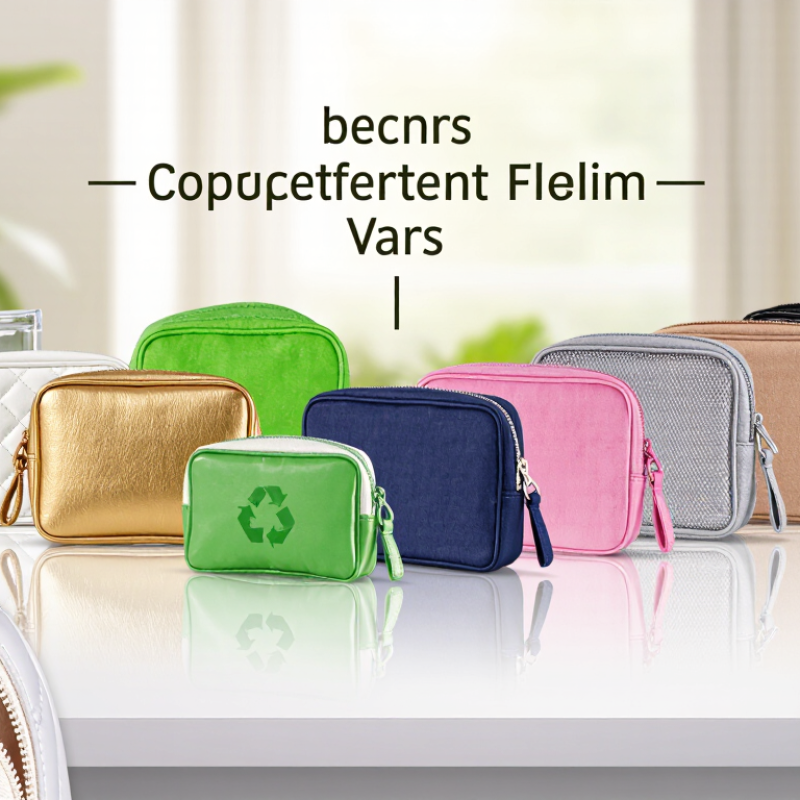
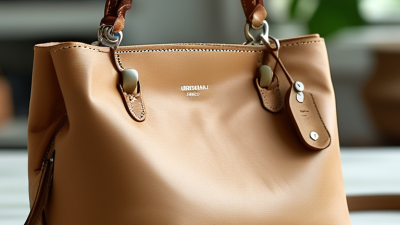
Discover our premium leather bag collection, designed for style and functionality. From chic purses, versatile tote bags, and sleek shoulder bags, to durable backpacks, stylish laptop bags, and compact makeup bags, we have it all. Explore luxurious duffel bags, practical belt bags, trendy sports bags, lunch bags, and pet bags.
China has become a major sourcing base for Cosmetic Bags, serving beauty brands, retailers, hotels, and promotional programs worldwide. Its manufacturers offer wide material choices, flexible customization, and competitive production capacity. Yet a polished sample does not guarantee dependable delivery.
Beauty-packaging consultant Florence Bernardin has said, “A package must protect the product and express the brand.” This principle also applies to Cosmetic Bags. Buyers should examine fabric density, lining quality, zipper performance, edge binding, logo accuracy, and stitching strength. A bag may look attractive under showroom lighting, then fail after repeated opening. Small details matter.
This guide introduces China’s top 10 Cosmetic Bags manufacturers for global buyers. The selection considers manufacturing experience, product development, customization ability, quality systems, export support, and communication practices. It also recognizes a difficult truth: “Top” depends on the buyer’s needs. A factory specializing in recycled polyester may not suit a luxury leather project. Another may offer excellent sampling but require a higher minimum order quantity.
Reliable sourcing requires more than comparing quoted prices. Buyers should request material specifications, pre-production samples, inspection records, production schedules, and clear payment terms. Factory audits and third-party testing can reduce avoidable risks. Certifications should be verified, not simply displayed in a presentation.
Some information may change over time. That is worth acknowledging. Supplier capabilities, equipment, lead times, and compliance documents require current confirmation before purchasing decisions. The manufacturers below provide a practical starting point, not a substitute for careful due diligence.
China Top 10 Cosmetic Bag Manufacturers for Global Buyers
What Defines a Leading Cosmetic Bag Manufacturer in China
A leading cosmetic bag manufacturer offers more than attractive stitching. It controls fabric sourcing, cutting accuracy, printing, assembly, and final inspection. McKinsey’s 2023 beauty report projects the global beauty market could reach about USD 580 billion by 2027. This growth increases demand for reliable travel, gift, and retail packaging. Experienced Chinese manufacturers should provide clear specifications, stable lead times, and traceable materials. Buyers should also request factory audits, production samples, and documented quality procedures, such as ISO 9001-based controls.
Product details reveal manufacturing maturity. Check zipper strength, seam density, lining adhesion, color consistency, and odor after packaging. A good supplier can explain why polyester, cotton, recycled fabric, or coated materials suit different uses. It should also test samples under realistic handling, including repeated opening, surface rubbing, and light moisture exposure. A perfect sample proves little. Mass production can still expose weak stitching or uneven printing. This is where many purchasing plans need honest review.
Tips: Ask for a pre-production sample, a material specification sheet, and an inspection plan. Confirm carton dimensions, packing methods, and replacement procedures before payment. The Sustainable Packaging Coalition reports that packaging decisions increasingly consider material use and end-of-life impacts. Therefore, ask whether the bag uses recyclable components and minimal unnecessary packaging. Do not choose only by the lowest quotation. A slightly higher unit cost may prevent rework, delays, and customer complaints.
China’s cosmetic bag industry is concentrated in several practical production hubs. Guangdong supports complex development, from material selection to sample approval. Guangzhou and Dongguan offer dense networks for cutting, sewing, printing, and hardware sourcing. Shenzhen adds experienced export services and faster communication for international buyers.
Zhejiang is strong in flexible, cost-sensitive production. Yiwu connects buyers with fabric, zipper, lining, and packaging suppliers. Ningbo provides useful access to textile and logistics resources. Jiangsu and Fujian also support fabric bags, travel pouches, and structured cases. Their factories commonly handle polyester, nylon, cotton canvas, PU, and recycled fabrics. Some workshops provide embroidery, heat transfer, digital printing, quilting, and waterproof finishing.
Factory capability still varies widely. A low quotation may hide weak stitching or inconsistent color control. Ask for production samples, seam-strength checks, material specifications, and inspection records. Confirm whether the factory controls cutting and sewing internally or outsources them. This affects lead time and accountability. Small orders may receive less attention. That is a real risk. Buyers should also verify packaging accuracy, labeling requirements, restricted-material policies, and export documentation before placing bulk orders. Independent inspections remain useful, even with experienced suppliers. No production hub is perfect. A careful audit often matters more than a polished showroom.
Guangdong and Zhejiang are major sourcing regions for cosmetic bags, supported by strong accessory, textile, packaging, and export supply chains. Fujian, Jiangsu, Shandong, and Hebei also provide specialized capacity for textile, leather, outdoor, and mass-market production. Scores represent a comparative 0–100 capability index based on manufacturing specialization, material access, customization capacity, and export infrastructure; they are not company-level figures.
When evaluating China’s top cosmetic bag suppliers, treat a ranking as a starting point, not proof. Factory capability matters more than polished catalog photography. Request three production samples, not one showroom sample. Check zipper alignment, seam density, lining tension, odor, and logo placement under normal handling. Then repeat the inspection after washing or abrasion testing. Small details expose process control.
Material claims need evidence. Textile Exchange’s Materials Market Report 2024 recorded 124 million tonnes of global fiber production in 2023. That scale makes recycled-content and fiber-origin claims easy to exaggerate. Ask for composition records, laboratory test reports, and batch-level traceability. UNEP estimates that 92 million tonnes of textile waste are generated globally each year. Choose suppliers that explain material use, packaging reduction, and production waste clearly. Use ISO 2859-1 sampling plans for consistent pre-shipment inspections. Verify colorfastness, tensile strength, seam strength, and metal safety through independent laboratories. Do not accept vague certificates.
Supplier reliability is measurable in ordinary paperwork. Compare quoted lead times with capacity, holiday planning, defect rates, and corrective-action records. Ask who owns tooling, how revisions are approved, and what happens after a failed inspection. A polished sample can still hide weak repeatability. An audited facility may still miss a deadline. Your scorecard will be imperfect. Review it after every shipment.
| Rank | Anonymous Supplier Profile | Manufacturing Region | Main Product Capability | Typical MOQ (pcs/SKU) |
Sample Lead Time (days) |
Bulk Lead Time (days) |
Common Materials | Customization Capability | Compliance Evidence to Request | Indicative Evaluation Score / 100 |
|---|---|---|---|---|---|---|---|---|---|---|
| 01 | Profile A — Premium Structured Cases | Guangdong | Hard-shell cases, molded travel organizers, premium vanity boxes | 500–1,000 | 7–12 | 30–45 | PU, polyester, EVA, microfiber lining | Custom molds, compartments, trims, packaging, private labels | Factory audit, material test reports, REACH and CPSIA declarations where applicable | 92 |
| 02 | Profile B — High-Volume Soft Bags | Zhejiang | Flat pouches, toiletry bags, zipper cosmetic cases | 1,000–3,000 | 5–10 | 25–40 | Polyester, cotton canvas, nylon, PU | Screen printing, embroidery, woven labels, custom hardware | ISO 9001 evidence, social-audit report, colorfastness and seam-strength tests | 90 |
| 03 | Profile C — Sustainable Material Specialist | Jiangsu | Recycled-fabric pouches, reusable organizers, promotional bags | 1,000–2,000 | 7–14 | 35–50 | GRS-certified recycled polyester, organic cotton, RPET lining | Material sourcing, recycled-content documentation, custom dimensions | Valid GRS transaction certificate, scope certificate, chemical test report | 89 |
| 04 | Profile D — Mid-Market OEM Factory | Fujian | Basic cosmetic pouches, gift sets, travel kits | 500–1,500 | 7–12 | 30–45 | Polyester, nylon, cotton, PVC-free coated fabric | Logo application, lining, zipper pulls, color matching, set assembly | Pre-production sample, AQL inspection plan, restricted-substance testing | 87 |
| 05 | Profile E — Low-MOQ Custom Workshop | Guangxi | Small-batch pouches, handmade details, boutique collections | 100–500 | 10–18 | 35–60 | Cotton, linen blends, PU, recycled polyester | Low-volume prototyping, artwork changes, mixed-color production | Material composition, needle-detection policy, workmanship inspection | 84 |
| 06 | Profile F — Promotional and Retail Supplier | Anhui | Entry-level pouches, event merchandise, retail multipacks | 2,000–5,000 | 5–9 | 20–35 | Non-woven fabric, polyester, cotton canvas, PU | Simple prints, standard shapes, barcode and retail packing | Factory profile, production photos, pre-shipment inspection records | 82 |
| 07 | Profile G — Technical Travel Organizer Factory | Hunan | Water-resistant organizers, hanging toiletry bags, multi-compartment cases | 800–2,000 | 8–14 | 35–50 | Nylon, polyester, mesh, TPU-coated fabric | Water-resistant construction, elastic loops, hooks, custom inserts | Water-resistance test method, zipper testing, dimensional inspection | 81 |
| 08 | Profile H — Fashion-Trim Focused Factory | Guangdong | Fashion pouches, quilted cases, decorative cosmetic bags | 500–1,500 | 8–15 | 35–55 | Velvet, satin, cotton, PU, recycled fabrics | Quilting, piping, beads, metal trims, custom decorative panels | Trim safety review, colorfastness report, workmanship sample approval | 79 |
| 09 | Profile I — Integrated Gift-Set Producer | Shandong | Cosmetic bags with mirrors, brushes, bottles, and gift packaging | 1,000–3,000 | 10–16 | 40–60 | Polyester, PU, EVA, cardboard, acrylic components | Product bundling, inserts, retail packaging, kitting and fulfillment | Component specifications, packaging-drop test, product safety documents | 77 |
| 10 | Profile J — Export-Oriented Standard Supplier | Jiangxi | Standard cosmetic pouches, promotional sets, basic travel cases | 1,000–3,000 | 7–14 | 30–50 | Polyester, nylon, cotton canvas, PU | Logo printing, standard molds, color and packaging adjustments | Business license, factory audit, quality-control plan, shipment inspection | 75 |

China’s top 10 cosmetic bag manufacturers serve buyers across retail, travel, and professional beauty channels. Product selection now extends beyond simple zip pouches. Common formats include cosmetic cases, toiletry bags, brush holders, hanging organizers, and compact drawstring styles. Each format supports a different use. A hanging bag suits hotel bathrooms, while a structured case protects bottles during transport.
Materials strongly affect performance and price. Polyester and nylon offer light weight and practical water resistance. PU creates a smoother, leather-like appearance. Recycled polyester supports sustainability claims, but buyers should request verified material records. Grand View Research reported the global cosmetic packaging market at over USD 30 billion in 2023, with continued growth through 2030. This wider market signal supports stronger demand for functional, attractive packaging products.
Customization may include dimensions, lining, compartments, handles, zippers, labels, printing, and molded inserts. Digital printing works well for short runs. Heat-transfer printing can create sharper graphics on fabric. According to Mordor Intelligence, the cosmetic packaging market is projected to grow at roughly 6% annually through 2030. However, customization is not automatically better. More pockets can increase weight and sewing defects. Buyers should check sample measurements, colorfastness, zipper cycles, odor, and stitching density before ordering. The ranking is not absolute. Factory capability changes by product type.
China’s top 10 cosmetic bag manufacturers should be evaluated beyond catalog photos. McKinsey estimates the global beauty market may reach about $590 billion by 2028, growing roughly 6% annually. That growth increases pressure on suppliers to deliver stable quality, flexible production, and reliable export service.
During factory audits, check sewing lines, zipper testing, material traceability, and final inspection records. Request a pre-production sample with approved dimensions, lining, logo placement, and color references. Use AQL-based inspections for bulk orders, while checking seam strength, odor, stains, and packaging damage.
In my sourcing experience, small specification changes often create large shipment problems. I once underestimated carton compression. The bags arrived usable, but several retail boxes were crushed.
Export readiness also matters. Confirm HS classification, commercial invoices, carton markings, and destination labeling requirements before production. Verify whether the factory regularly ships to your target market. The World Bank’s Logistics Performance Index shows that customs efficiency and shipment reliability strongly affect international trade performance. A low factory price means little when documents delay clearance.
Tips: Compare at least three audited suppliers. Ask for recent inspection reports, not only certificates. Test samples after transport simulation. Keep one sealed reference sample for dispute review. Accept reasonable variation, but define it in writing. Perfect control is unlikely; documented control is practical.