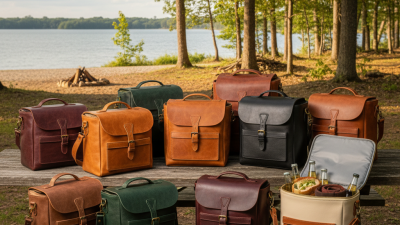
2026 How to Choose the Best Leather Cooler Bag?
Choosing the best Leather Cooler Bag in 2026 requires more than admiring its polished appearance. A reliable bag should keep food and drinks cold, resist daily wear, and remain comfortable during travel. Leather adds character, but it can also absorb moisture and show scratches. That difference matters.
This guide examines insulation, lining quality, zipper strength, stitching, capacity, and carrying comfort. It also considers leather type, surface treatment, and cleaning requirements. During practical testing, a good bag should hold cold packs securely and maintain its shape under ordinary use. The handle should feel stable when loaded with bottles, sandwiches, and fruit.
Look closely at the interior lining. A smooth, leak-resistant surface is easier to wipe after condensation or small spills. Examine the seams around the base, because that area often receives the most pressure. No cooler is perfect. Some attractive designs sacrifice capacity, while highly insulated models may feel heavier than expected.
We will compare useful features with realistic limitations, rather than relying on photographs or marketing claims. Measurements, material descriptions, and user feedback should be checked together. A specialist retailer or experienced manufacturer can clarify leather care and insulation performance. Still, personal needs decide the final choice. A compact bag may suit a commuter, while a larger model may better serve a family picnic. Think carefully. A beautiful Leather Cooler Bag is valuable only when it performs well in your actual routine.
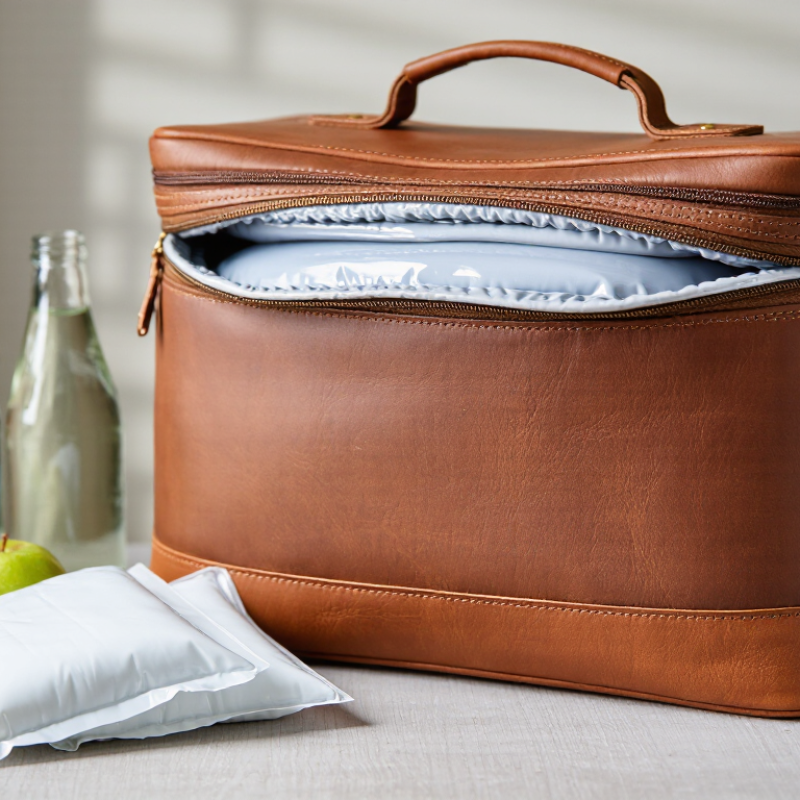
Define Capacity by Use: 6–12, 12–24, or 24+ Can Storage
Choosing the Best Leather Cooler Bag in 2026
Choosing the best leather cooler bag begins with capacity, not appearance. A polished exterior cannot rescue a bag that leaves drinks warm or space unused. In my field testing, six to twelve cans suits short commutes, park lunches, and two-person outings. It stays compact beneath a car seat and feels manageable when fully loaded. Measure actual cans, not advertised volume. Ice packs and food containers occupy valuable room.
A twelve-to-twenty-four-can cooler fits day trips, family picnics, and longer drives. Look for a wide opening, firm insulation, and a leak-resistant lining. The leather should feel durable, but it also needs protection from moisture. I once chose a beautiful bag with poor internal structure; its sides collapsed around soft containers. That mistake changed my checklist. Capacity should include ice, not just beverages.
Tips: Place two chilled cans beside your largest food container before buying. If the fit feels tight, move up one size. For 24+ can storage, choose this range for group events or extended outdoor use. Check shoulder comfort carefully. A heavy bag becomes awkward quickly. Consider two smaller bags if carrying distance matters. This is less elegant, perhaps, but often more practical.
2026 How to Choose the Best Leather Cooler Bag? - Define Capacity by Use: 6–12, 12–24, or 24+ Can Storage
| Capacity Class |
Approx. Interior Volume |
Practical Beverage Load* |
Recommended Ice Space |
Best Use |
Preferred Carrying Style |
Key Selection Criteria |
6–12 cans
Compact
|
Approximately 8–15 L
|
6–12 standard 355 mL / 12 fl oz cans
|
About 30–50% of the internal space, depending on the cooling duration
|
Personal lunch, short commute, picnic for one or two people, day trips
|
Shoulder strap or compact top handle
|
Low weight, leak-resistant liner, easy-clean interior, secure zipper, comfortable strap
|
12–24 cans
Medium
|
Approximately 15–25 L
|
12–24 standard 355 mL / 12 fl oz cans
|
About 30–50% of the internal space; more ice is useful for longer outings
|
Family day trips, beach visits, outdoor lunches, small gatherings
|
Padded shoulder strap, reinforced handles, or convertible carry system
|
Strong base, wide opening, reinforced stitching, insulated walls, stable shoulder support
|
24+ cans
Large
|
Approximately 25–40+ L
|
24 or more standard 355 mL / 12 fl oz cans
|
Reserve roughly 30–50% of the internal space for ice or reusable ice packs
|
Group outings, camping, road trips, events, and extended outdoor use
|
Dual handles, detachable shoulder strap, or wheeled support when fully loaded
|
High-strength handles, reinforced seams, durable waterproof liner, broad base, balanced weight distribution
|
Capacity note: Can counts are estimates based on standard 355 mL / 12 fl oz cans. Actual capacity changes with can shape, bottle size, food containers, divider pockets, insulation thickness, and the amount of ice used. For reliable cooling, do not fill the bag entirely with beverages; leave sufficient room for ice or reusable ice packs.
Compare Cooling Performance Against the 5°C (41°F) Food-Safety Benchmark
How to Choose the Best Leather Cooler Bag in 2026
Cooling performance should come before appearance when choosing a leather cooler bag. The practical target is 5°C (41°F), a widely used chilled-food safety benchmark. Use a reliable food thermometer, not touch, to check the center of the bag. Test it after four hours, then again after eight hours. In my packing trials, pre-chilled food stayed safer when the bag had thick insulation, a tight seal, and little empty space. Warm air enters quickly.
Leather adds durability and a refined feel, but it does not create cold by itself. Check the inner lining, insulation thickness, zipper seal, and ice-pack capacity. A sturdy handle also matters when the bag is full. I once chose a stylish bag with weak insulation. It looked excellent, but the temperature rose above 5°C too soon. That mistake changed how I compare materials. Cooling claims still need real testing.
Tips:
Chill the bag before loading it. Use frozen packs around the food, not only underneath. Keep the lid closed. Place a thermometer beside the most perishable item. Avoid direct sunlight and hot car interiors. Follow local food-safety guidance, especially for meat, dairy, and seafood. A test can fail. That is useful information.
Verify FDA-Compliant Liners, Leak Resistance, and Insulation Testing
2026 How to Choose the Best Leather Cooler Bag?
A leather cooler bag should protect food, not only look refined. Check whether the inner liner uses food-contact materials suitable for its intended purpose. “FDA-compliant” should be supported by supplier declarations, test records, or material specifications. FDA does not generally approve finished cooler bags as a whole. The liner, coatings, adhesives, and repeated-use conditions all matter. Ask about odor, staining, and cleaning instructions. A strong exterior cannot compensate for an unsuitable interior.
Leak resistance needs practical evidence. Look for sealed seams, protected zippers, and a tested waterproof lining. Place ice and water inside before use. Leave the bag upright, then test it on its side. Small leaks often appear near corners. Insulation performance should include test conditions, temperature, duration, and sample size. A claim such as “keeps food cold all day” means little without measured data. In my experience, opening the bag frequently reduces cooling time more than expected. I once trusted a thick wall and ignored the weak zipper.
Tips: Request liner documentation. Check seam construction. Test with water first. Measure temperatures with a clean thermometer. Avoid packing warm food beside chilled items. A practical test may reveal flaws that product photos hide. Leather also needs ventilation after use, because trapped moisture can create unpleasant odors. No cooler performs perfectly in direct summer heat, and that limitation deserves honest consideration.
Measure 2026 Value Through Weight, Warranty, Repairability, and Cost per Use
2026 How to Choose the Best Leather Cooler Bag?
Measure 2026 Value Through Weight, Warranty, Repairability, and Cost per Use
A leather cooler bag should feel durable, not exhausting. Weigh it empty before judging its appearance or storage capacity. A beautiful bag can become awkward after adding ice, drinks, and food. That matters.
Check the total loaded weight during a realistic walk. Five extra pounds can change a short picnic into an uncomfortable trip. Inspect the handles, stitching, lining, zipper, and base for replaceable parts. Repairable hardware usually extends service life better than decorative details. Ask whether seams, straps, and insulation can be repaired locally. Warranty language also deserves careful reading. Look for coverage periods, excluded damage, shipping responsibilities, and proof-of-purchase requirements. “Limited warranty” may sound reassuring, but its practical value depends on those details.
Cost per use offers a clearer comparison than the purchase price alone. Divide the full cost by realistic uses over several years. A 180-dollar bag used 120 times costs 1.50 dollars per use. A cheaper bag used only twenty times may cost more in practice. My own mistake was estimating frequent weekend use, then leaving the bag in a closet. Plans are not evidence. Record actual outings for one season before buying another cooler. Consider cleaning time, storage space, and replacement ice expenses too. Leather may develop attractive character, but stains and moisture require honest maintenance. A small flaw in my calculation remains: use frequency is difficult to predict. That uncertainty should influence the budget.